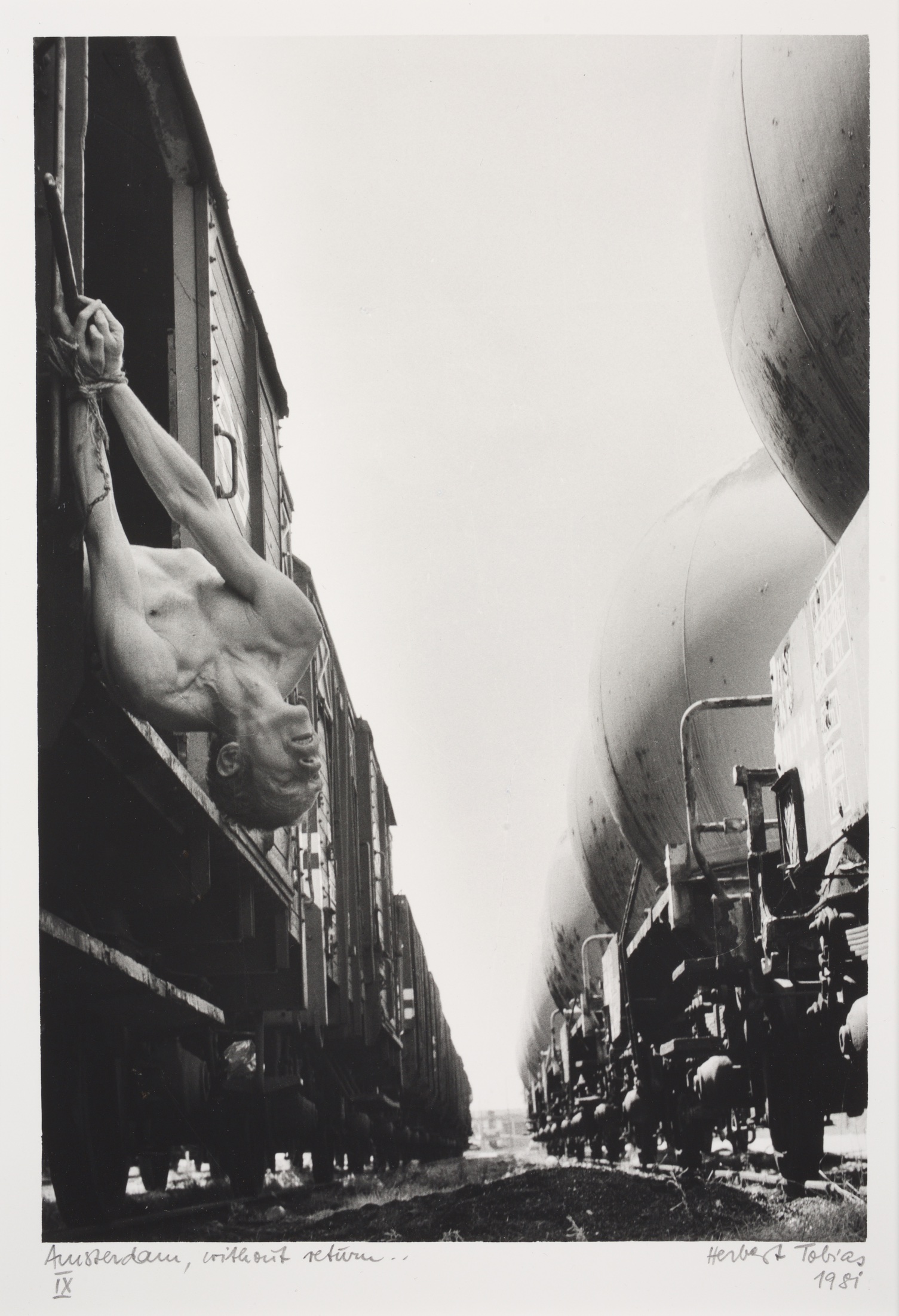

Robert Mapplethorpe & Herbert Tobias
Censorship is obscene [1]
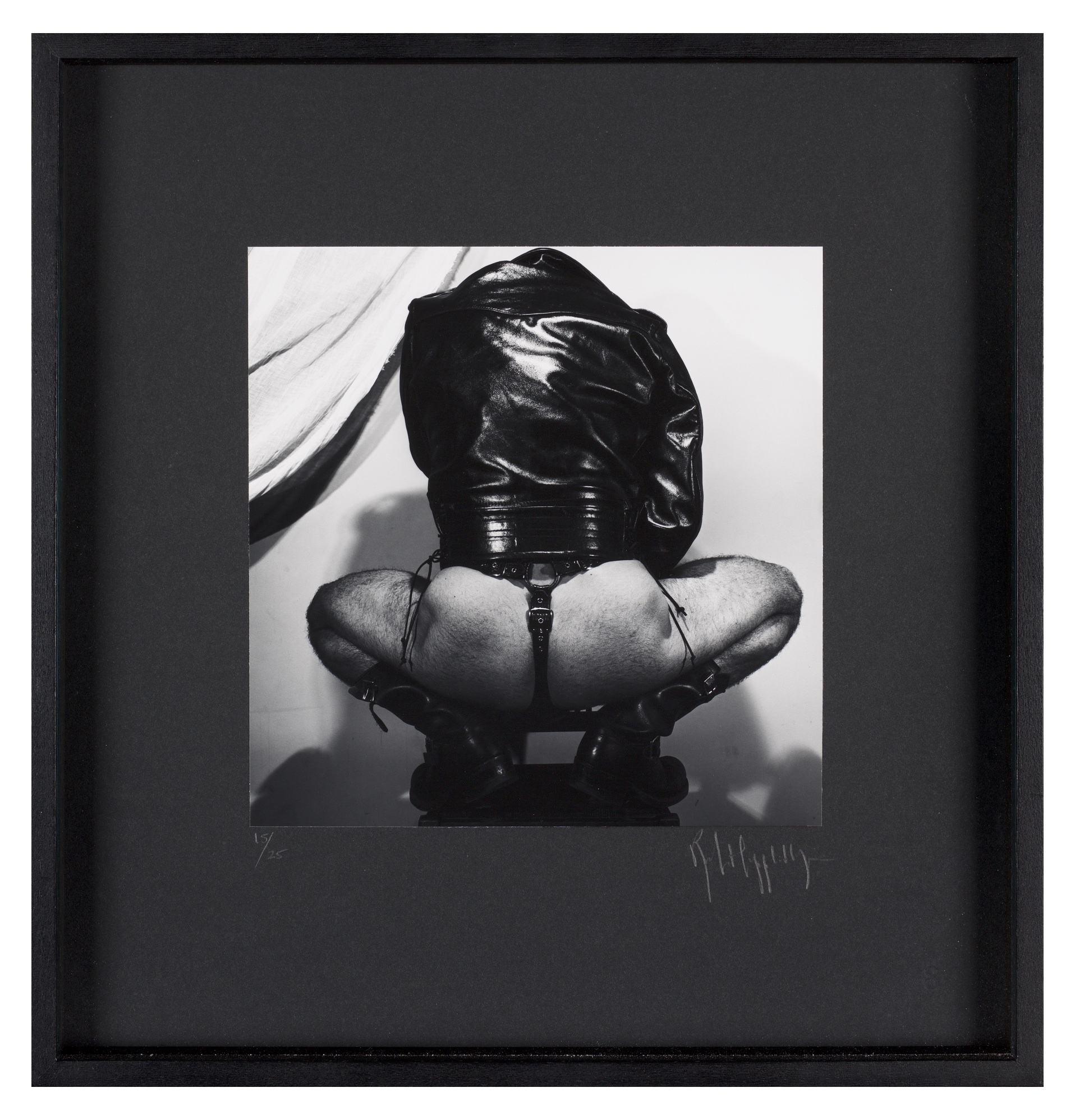
Exhibiting the legendary Portfolio X by Robert Mapplethorpe on the occasion of the PhotoBrussels Festival, alongside other explicit photographs by the artist, naturally carries a political intention. It has become almost impossible to organize an exhibition of his work within a museum institution without provoking controversy; any exhibition of Robert Mapplethorpe’s work is either, at worst, accused of promoting pornography or, at best, suspected of having been previously self-censored. The thirteen images of Portfolio X, some of which are indeed pornographic, are nevertheless well known and easily accessible online to anyone who wishes to see them. They are of remarkable technical quality and display masterful composition. In our exhibition, they are shown alongside other, more rarely seen images, notably intimate psychological portraits and several unique Polaroids.
The presentation of approximately thirty vintage prints—each produced during the artist’s lifetime and most of them signed by his hand—offers a sufficiently broad overview to explore the reasons why Robert Mapplethorpe became the uncontested star of queer and subversive art and culture in the 1970s and 1980s.
To extend this reflection, we have also chosen to exhibit around fifteen prints by the highly pioneering German photographer Herbert Tobias, and to attempt to establish a dialogue between the works of the two artists. Their respective homoerotic works—conceived as early as 1951 for Tobias and from 1973 onward for Mapplethorpe—not only display striking similarities, but also contributed to the liberation of queer visibility and, above all, shaped a virile sadomasochistic imagery, granting legitimacy to gay fetish practices.
Herbert Tobias was born in Dessau on December 14, 1924, and died of AIDS-related complications in 1982. In 1943, before the age of twenty, he was sent to the Russian front, which he deserted just days before the end of the war. Using his Voigtländer 6×6 camera, he documented misery, destruction, and soldiers’ lives in bunkers. Upon returning to Germany, he considered a career in theater and, in the late 1940s, met his first love, Dick, a young civilian employee of the U.S. Army stationed in Heidelberg. The couple was reported for violating Article 175 of the Penal Code, which criminalized homosexuality in Germany from 1871 to 1994. Dick was even expelled from the country, but they reunited in Paris, where they settled in 1951. Dick obtained an artist’s grant there, while Herbert worked as a retoucher for Willy Maywald.
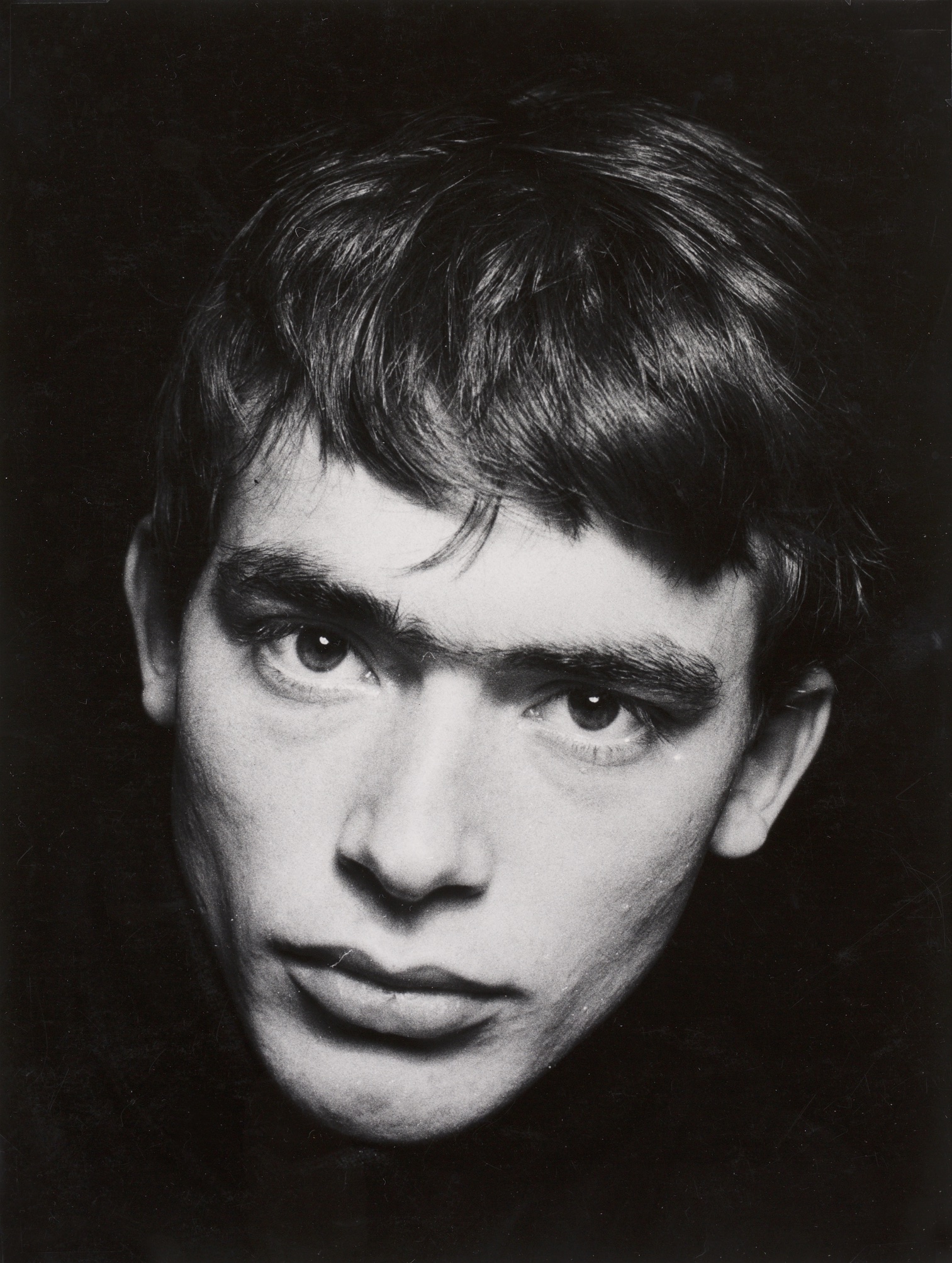
The years Herbert Tobias spent in Paris—where it was less necessary to conceal his love for another man—were marked by the discovery of outdoor cruising sites, quintessentially phantasmatic spaces of the gay community, and by encounters with numerous young men. Tobias photographed them in a very natural manner, even expressing a refusal of staging, remaining faithful to his early field-based photographic practice. The explicit eroticism emanating from these portraits lies primarily in the gaze of the models. Looking directly into the lens, they proudly yet naturally assert who they are, and more explicitly, their sexuality. This frontal gaze also results from a “dialogue” with the photographer, implying a form of mutual acceptance. These portraits of anonymous young men from the 1950s thus constitute the expression of Herbert Tobias’s own homosexual coming-out.
This idea of coming out through images—borrowed from a recently published book (November 2025)—helps contextualize the groundbreaking photographs Tobias produced as early as 1951. In The Ramble, NYC 1969, a collection of photographs taken by Arthur Tress in 1969 at an outdoor meeting place in Central Park, the photographer strikingly suggests that this photographic experience constituted his own coming-out. Although he became a star of aestheticized homoerotic photography, Tress paradoxically confessed that he “took these photographs knowing they would not be published for decades.” Taken just weeks before the Stonewall riots, his ethereal depiction of homosexual encounters offers a surprisingly disembodied image. Beyond the elaborate vegetal staging that occupies most of his images, his models mostly keep their eyes conspicuously closed or avert their gaze. The rare exceptions are portraits of hallucinated men, appearing almost deranged. These photographs make it clear that Tobias’s images, produced eighteen years earlier, were highly subversive and provocative, achieved with remarkable economy of means.
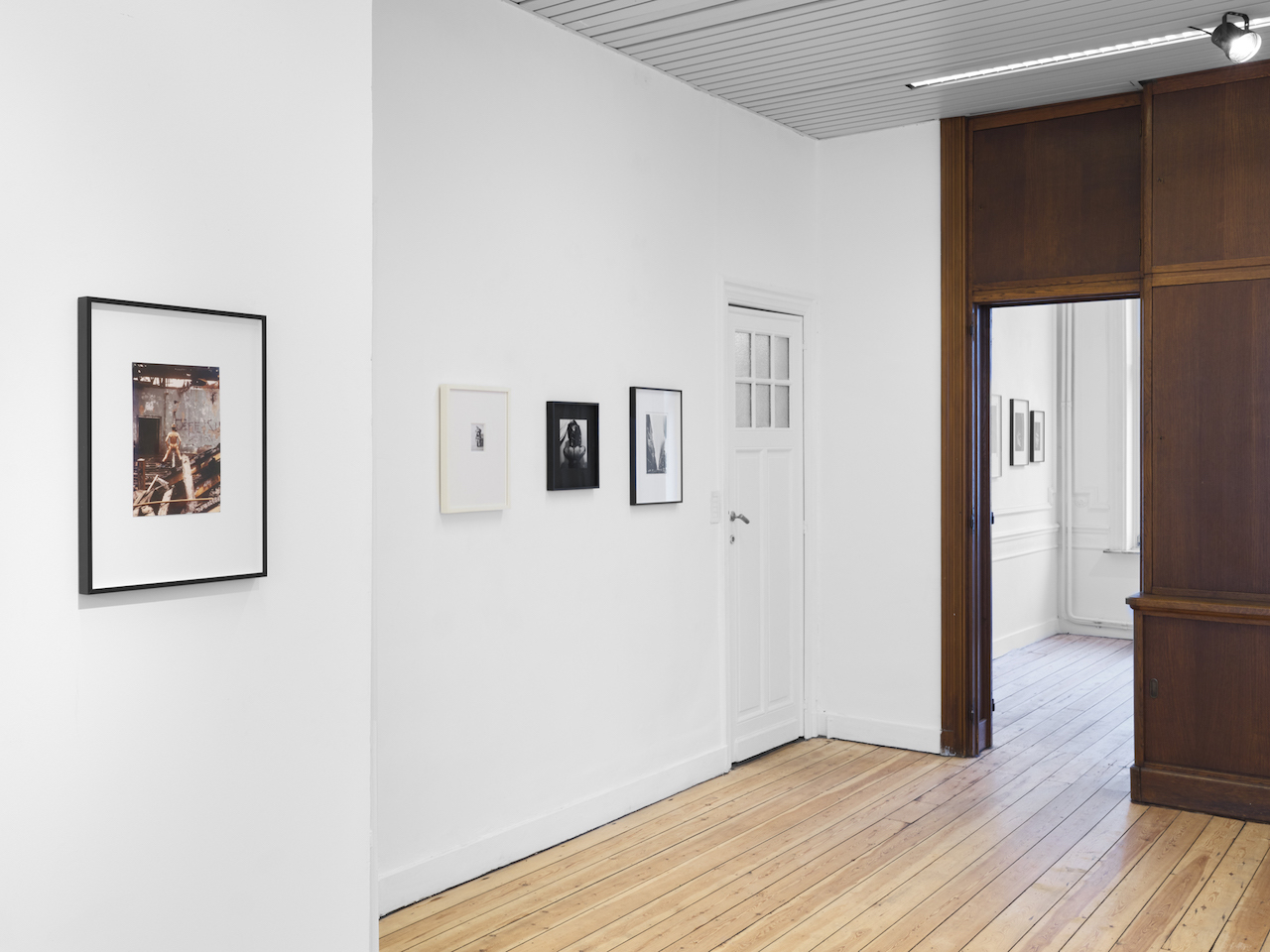
From 1953 onward, following his separation, Herbert Tobias returned to Berlin, where he began a career as a fashion photographer. Although cruising scenes and suggestive male portraits continued to reappear throughout his life—becoming increasingly explicit as social norms evolved and pornography gained broader acceptance—it is evident how decisive his two years in Paris (1951–1953) were. The BDSM theme, which would develop alongside successive stages of queer struggles, was already explicit in 1952 in Rêve éveillé d’après Querelle de Brest de Jean Genet, depicting a nude, bound, and offered man in a cellar cluttered with debris and lit only by basement windows. All the phantasmatic codes of the genre are already present: the solitary and vulnerable individual, anticipation, the thrill of danger, the risk of being discovered, dependence on a master, and the abandoned, sordid site that intensifies the sense of degradation. This photograph anticipates what major queer artists would only begin to explore twenty years later ; at a time when Robert Mapplethorpe was just six years old.
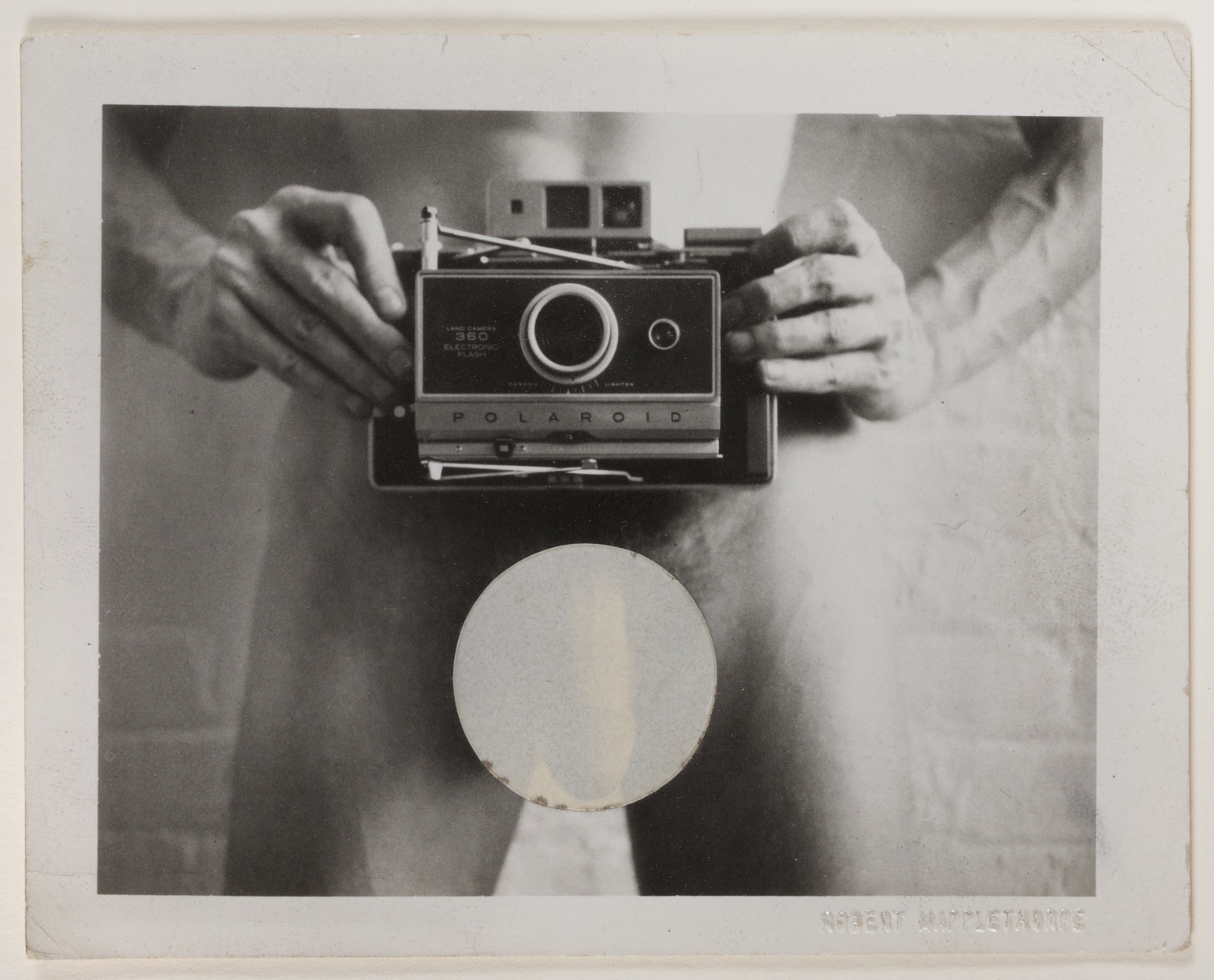
Robert Mapplethorpe was born in New York City on November 4, 1946, and died of AIDS-related complications in 1989. He began his artistic studies in 1963, producing early collages from pornographic magazines. Once given a Polaroid camera, photography became his preferred medium. The frontal nature of the image and the gaze—present or absent when he deliberately crops the body—define Mapplethorpe’s entire oeuvre. As with Herbert Tobias, these elements constitute a fascinating field of inquiry into the artist’s deeper intentions and the meaning of his work. From the invitation card to his first solo exhibition at the Light Gallery in 1973—featuring a frontal image of his sex vaguely concealed by a sticker—to his self-portrait from Portfolio X in 1978, in which he stares into the lens while exposing his buttocks clad only in chaps, a whip emerging from them and lending the image a satanic connotation, and finally to his last self-portrait of 1988, where only his pearlescent face and right hand holding a cane topped with a skull emerge from a black background, all phases of his life are synthesized into a direct confrontation with the camera.
If Herbert Tobias achieved his coming-out through photography, Robert Mapplethorpe likely legitimized his own SM practices by boldly exposing them to the public. Their works follow remarkably similar codes and processes. The care given to composition and their determination to focus intensely on the model—often without distraction, frequently without setting—testify to the shared modernity of their approach. Their mastery of contrast and light reveals a deep classical culture.
The two photographers most likely never met—there is currently no evidence that they ever encountered one another, nor even that Mapplethorpe was aware of the work of his elder by twenty-two years. It could, however, have happened: the German artist made several trips to New York around 1980, during which he photographed the Hudson River docks, much like Peter Hujar (1934–1987), another major figure of homoerotic photography in the 1970s and 1980s. These abandoned docks were known as homosexual meeting places, reputed for improvised orgies, and whose decay and danger echoed Rêve éveillé d’après Querelle de Brest de Jean Genet, while also underscoring the broader state of New York City at the time.
Ultimately, Robert Mapplethorpe and Herbert Tobias seem to have followed parallel paths without ever crossing. In the early 1950s, while working as a fashion photographer in Berlin, Tobias photographed the model Christa Päffgen—whom he is said to have encouraged to adopt a pseudonym to facilitate her international career—and who later became the singer Nico. By the late 1960s, she was living in New York among Andy Warhol’s protégés, alongside Mapplethorpe. Mapplethorpe’s work was first popularized in Europe through an exhibition held at Galerie Jurka in Amsterdam from May 5 to June 9, 1979. Its now-legendary catalogue included several images from Portfolio X, alongside society portraits of New York’s upper class and photographs of flowers. Herbert Tobias, in turn, exhibited at Galerie Jurka two years later, from August 8 to September 4, 1981, though no catalogue appears to have been published on that occasion.
Together, and twenty years apart, Herbert Tobias and Robert Mapplethorpe revolutionized the genre of homoerotic photography. In doing so, they exalted the imagination, practices, pride, sense of freedom, and visibility enjoyed by the queer community—from the Stonewall riots in 1969 to the arrival of AIDS in 1981.
Eric Mouchet
___________________
[1] Text printed on a T-shirt on the occasion of the exhibition The Perfect Moment in 1990 at the Contemporary Arts Center in Cincinnati; this exhibition sparked major controversy, and the CAC became the first cultural institution in the United States to be prosecuted for the content it exhibited.
AROUND THE EXHIBITION
// Photo Brussels Festival — January 22 to February 22, 2026
// Late opening — Friday, January 23, until 9 p.m.
// Conversation on the work of Robert Mapplethorpe with Xavier Canonne, Director of the Musée de la Photographie de Charleroi, and Eric Mouchet — Wednesday, February 11, 6 p.m.
// Robert Mapplethorpe & Herbert Tobias (22.01-14.03.2026) | Brussels
Category:
Exhibitions
Exhibition view Robert Mapplethorpe & Herbert Tobias, Galerie Eric Mouchet Brussels © We Document Art_1
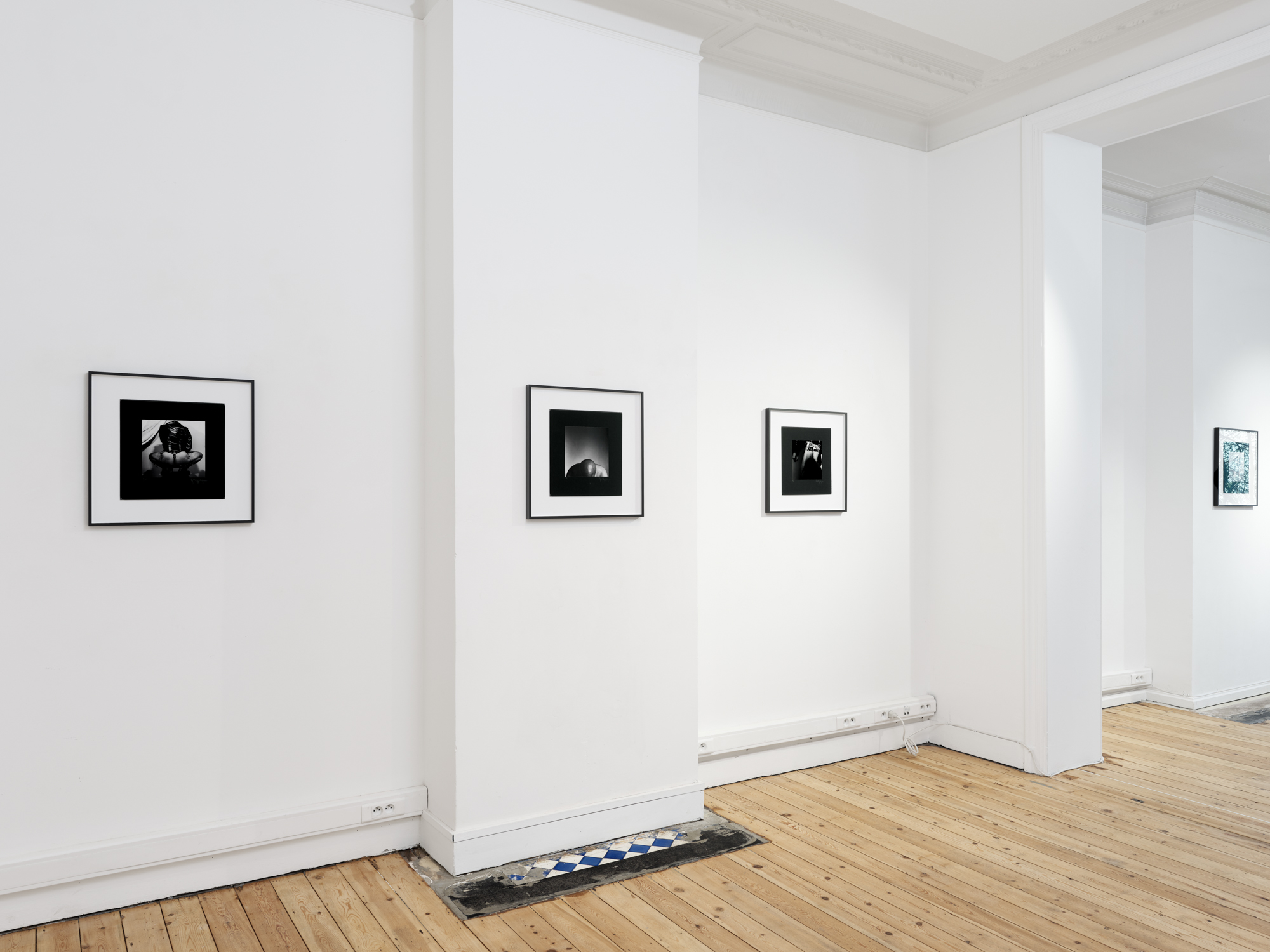
Exhibition view Robert Mapplethorpe & Herbert Tobias, Galerie Eric Mouchet Brussels © We Document Art_2
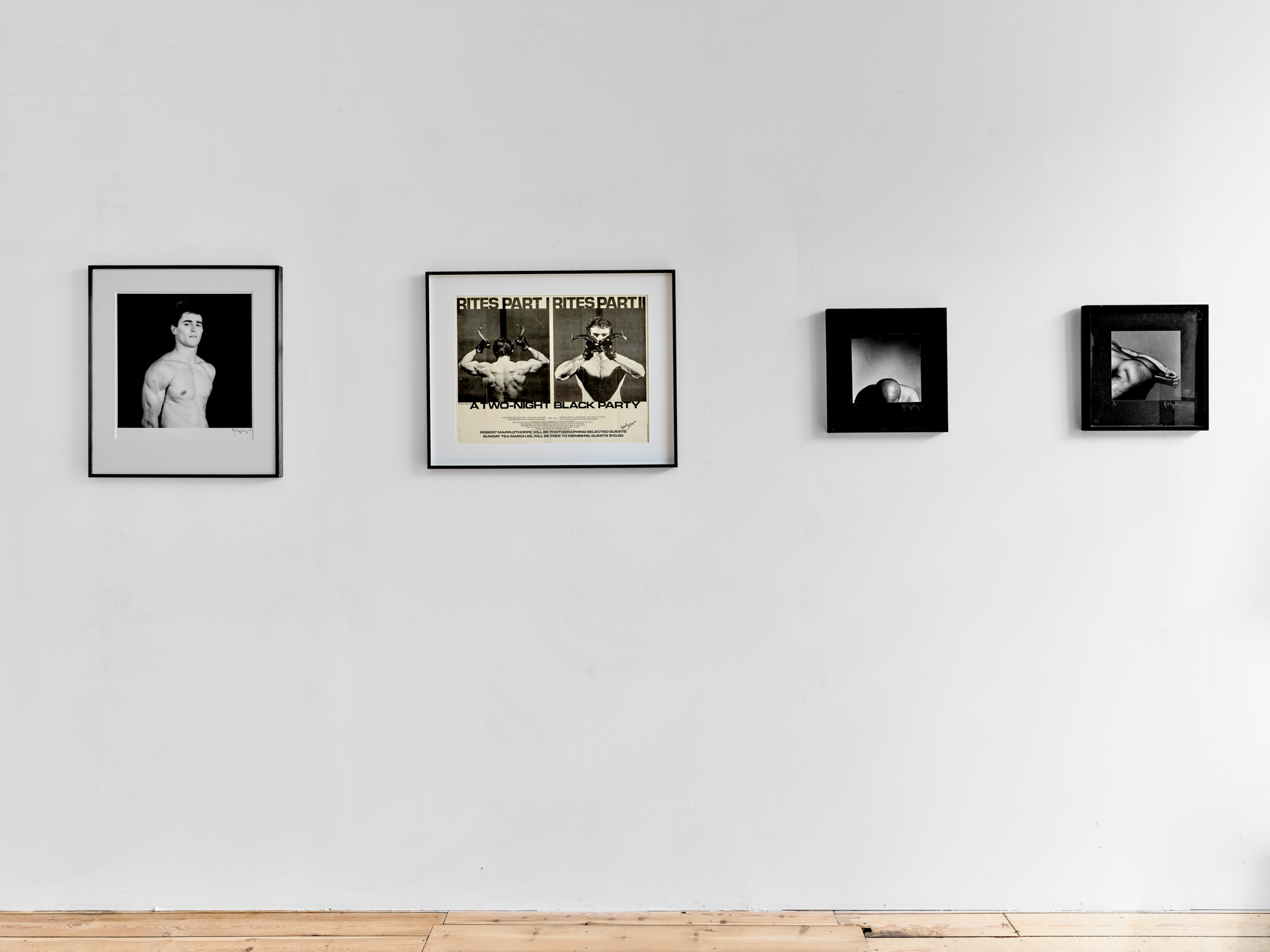
Exhibition view Robert Mapplethorpe & Herbert Tobias, Galerie Eric Mouchet Brussels © We Document Art_3
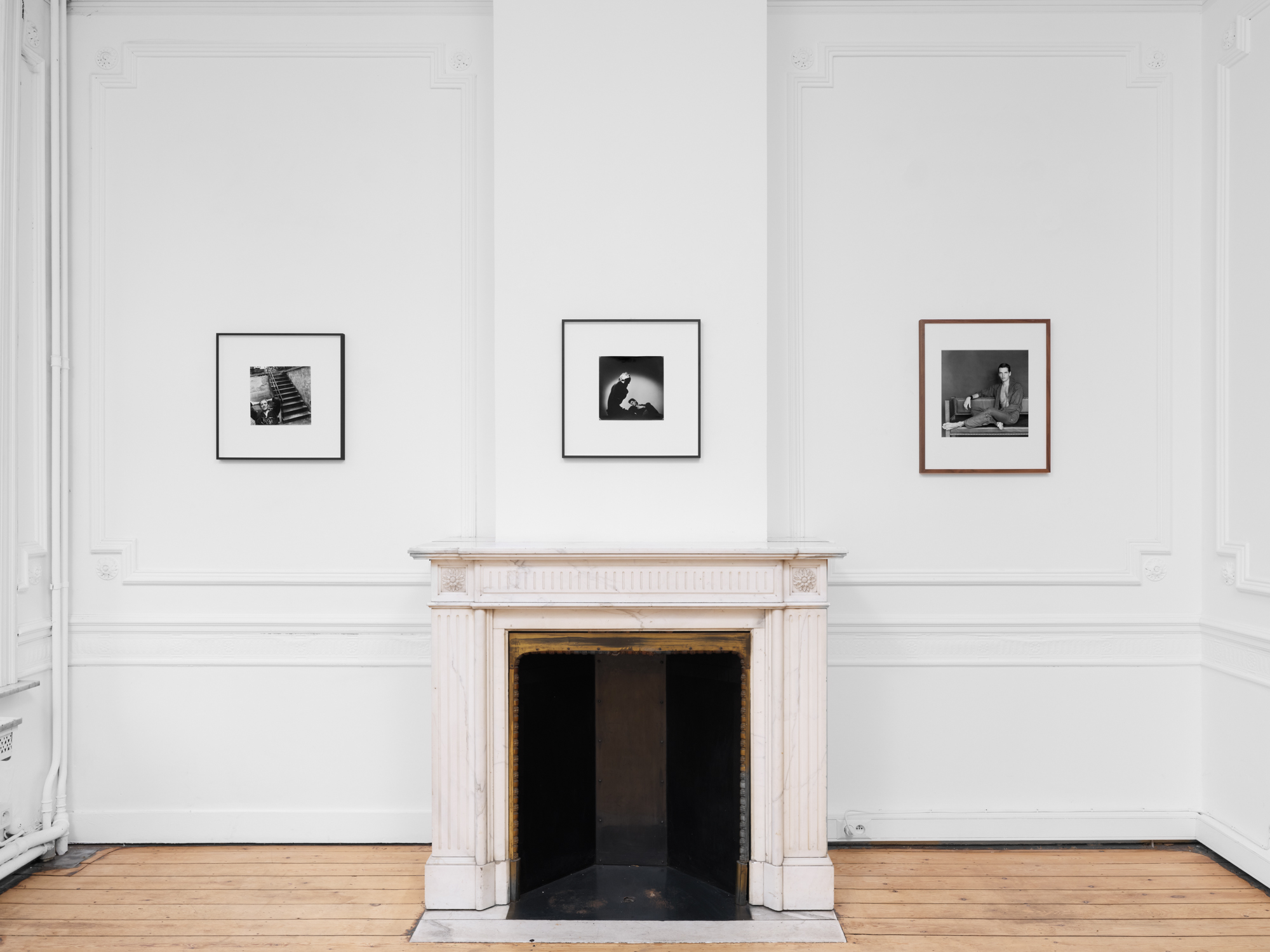
Exhibition view Robert Mapplethorpe & Herbert Tobias, Galerie Eric Mouchet Brussels © We Document Art_4
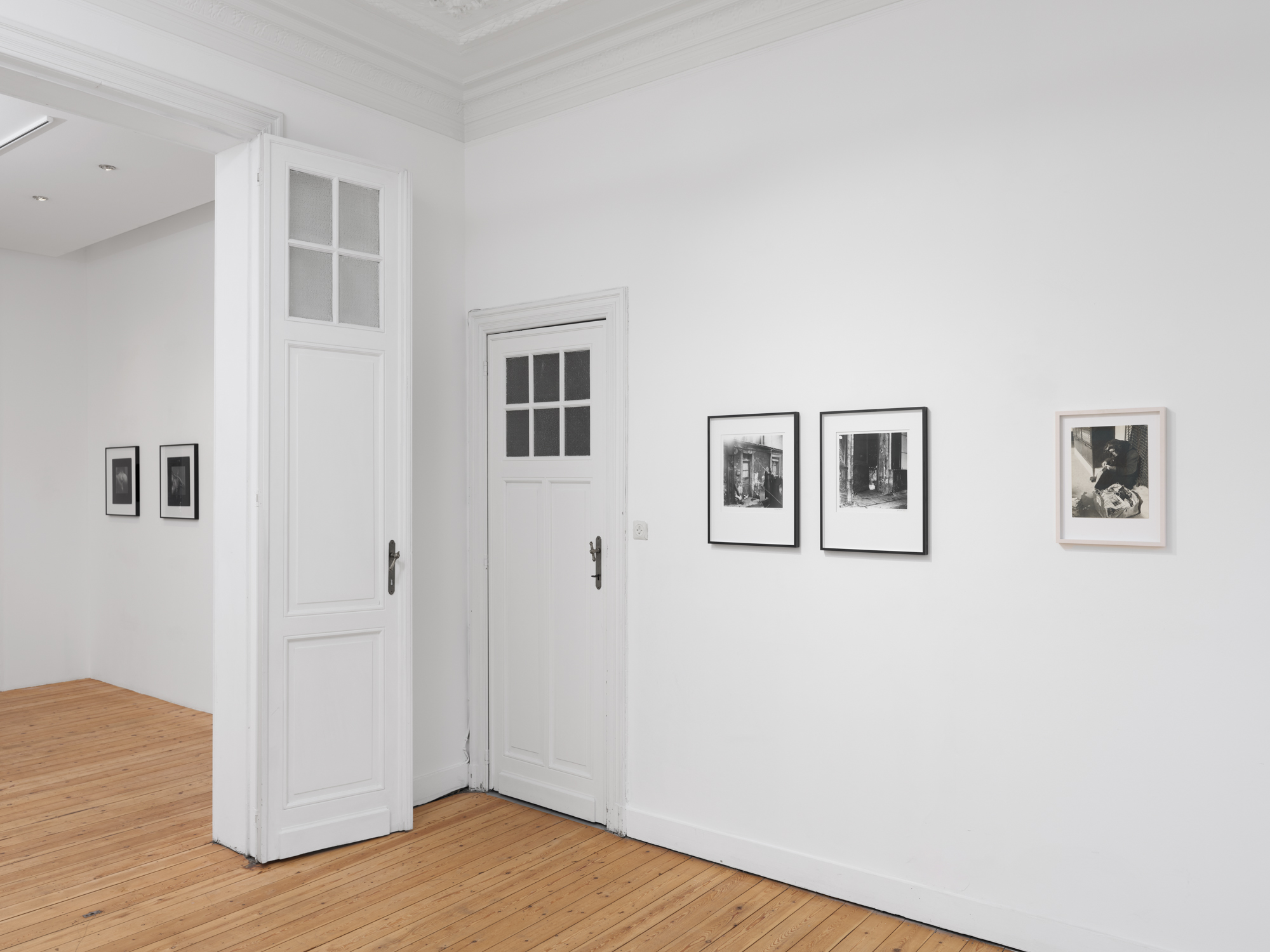
Exhibition view Robert Mapplethorpe & Herbert Tobias, Galerie Eric Mouchet Brussels © We Document Art_5
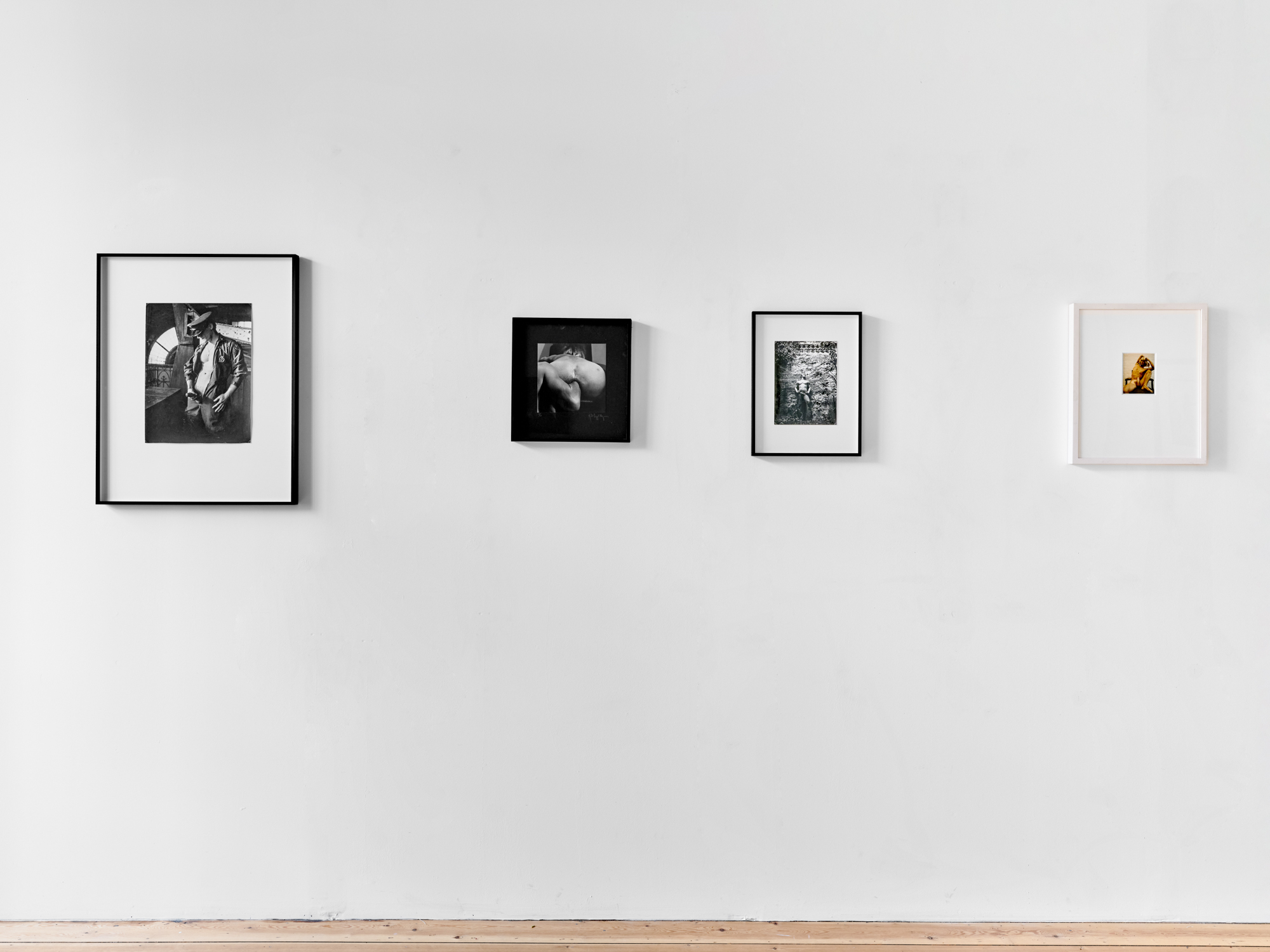
Exhibition view Robert Mapplethorpe & Herbert Tobias, Galerie Eric Mouchet Brussels © We Document Art_6
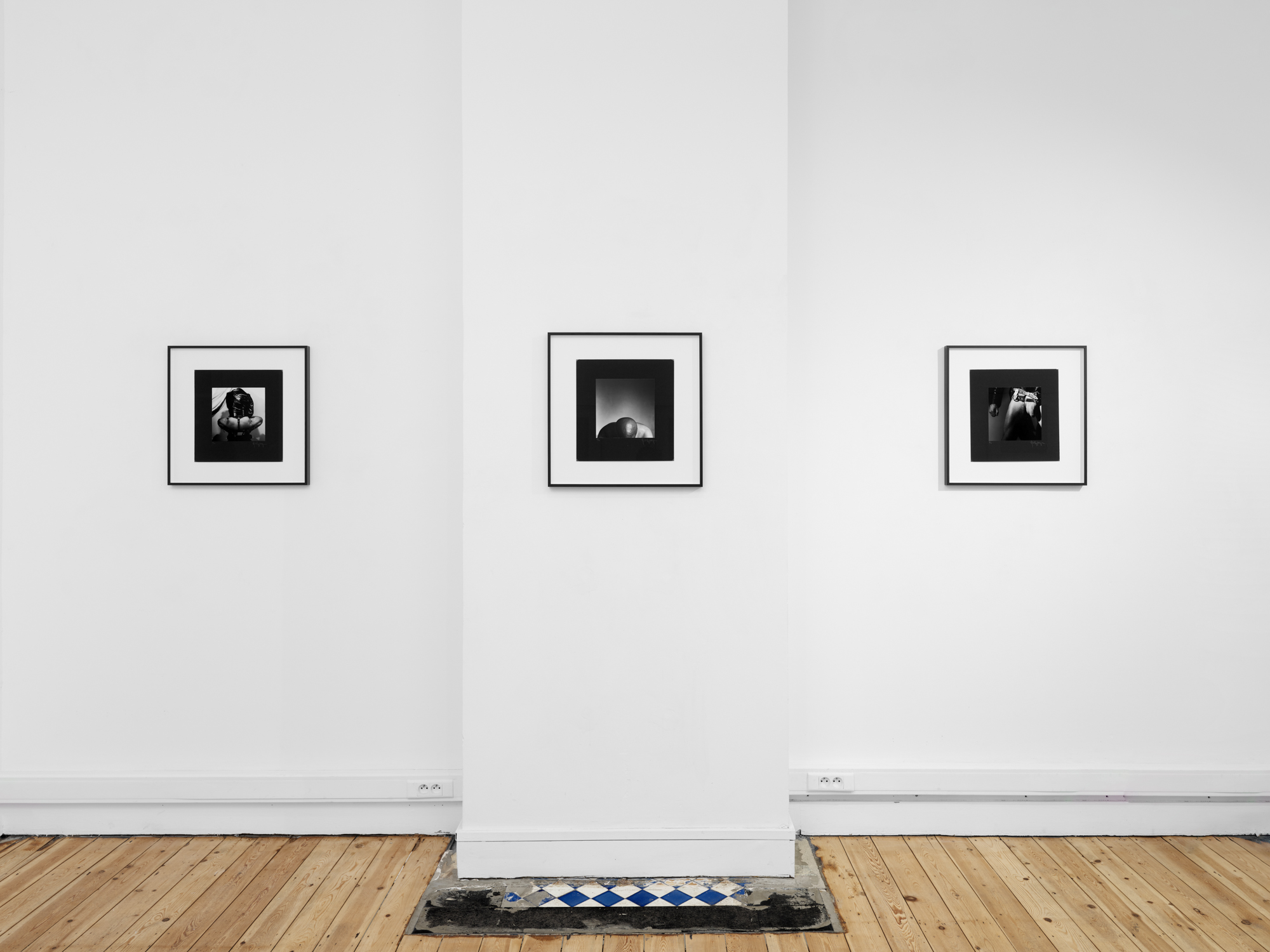
Exhibition view Robert Mapplethorpe & Herbert Tobias, Galerie Eric Mouchet Brussels © We Document Art_9
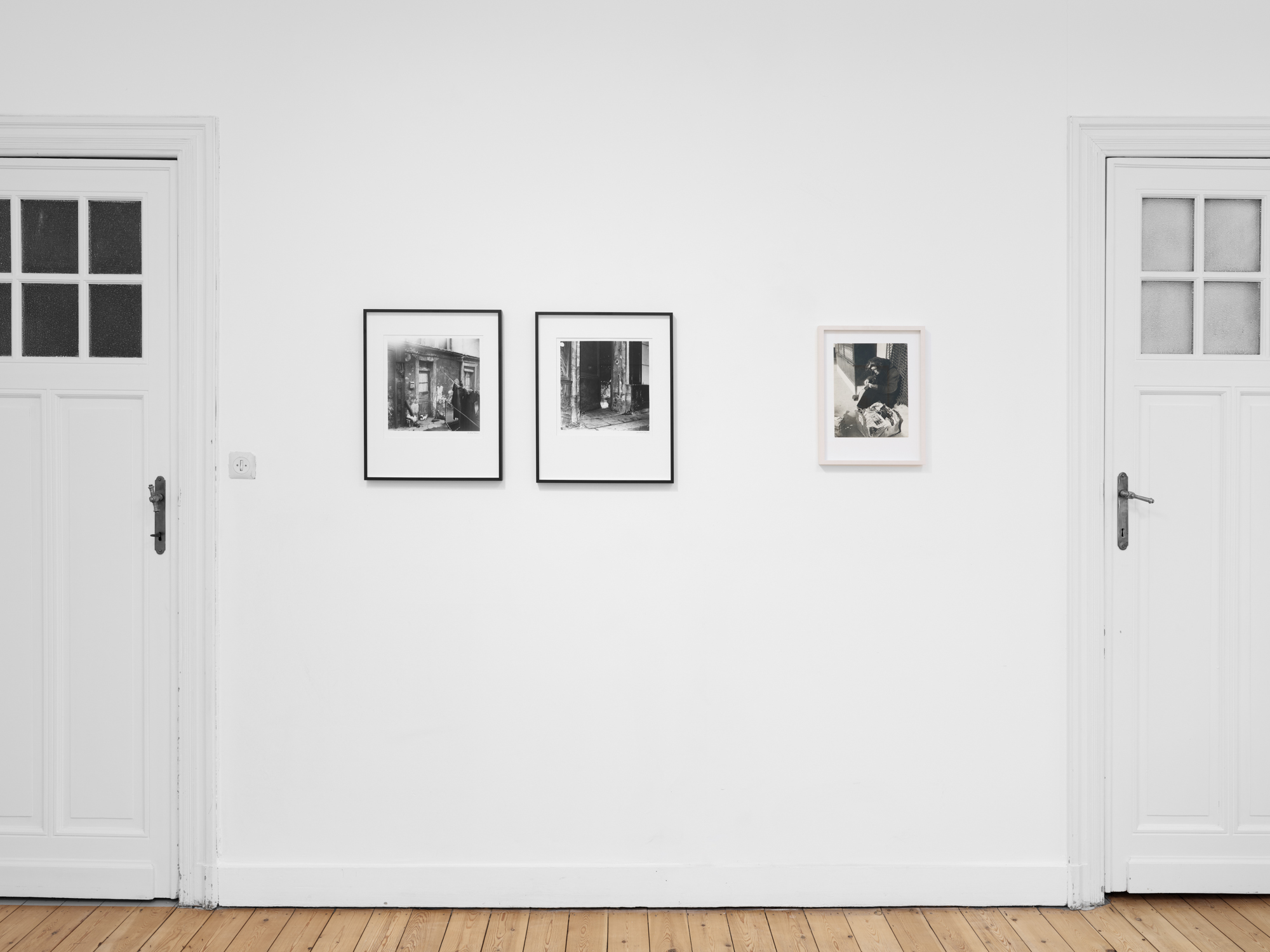
Exhibition view Robert Mapplethorpe & Herbert Tobias, Galerie Eric Mouchet Brussels © We Document Art_10
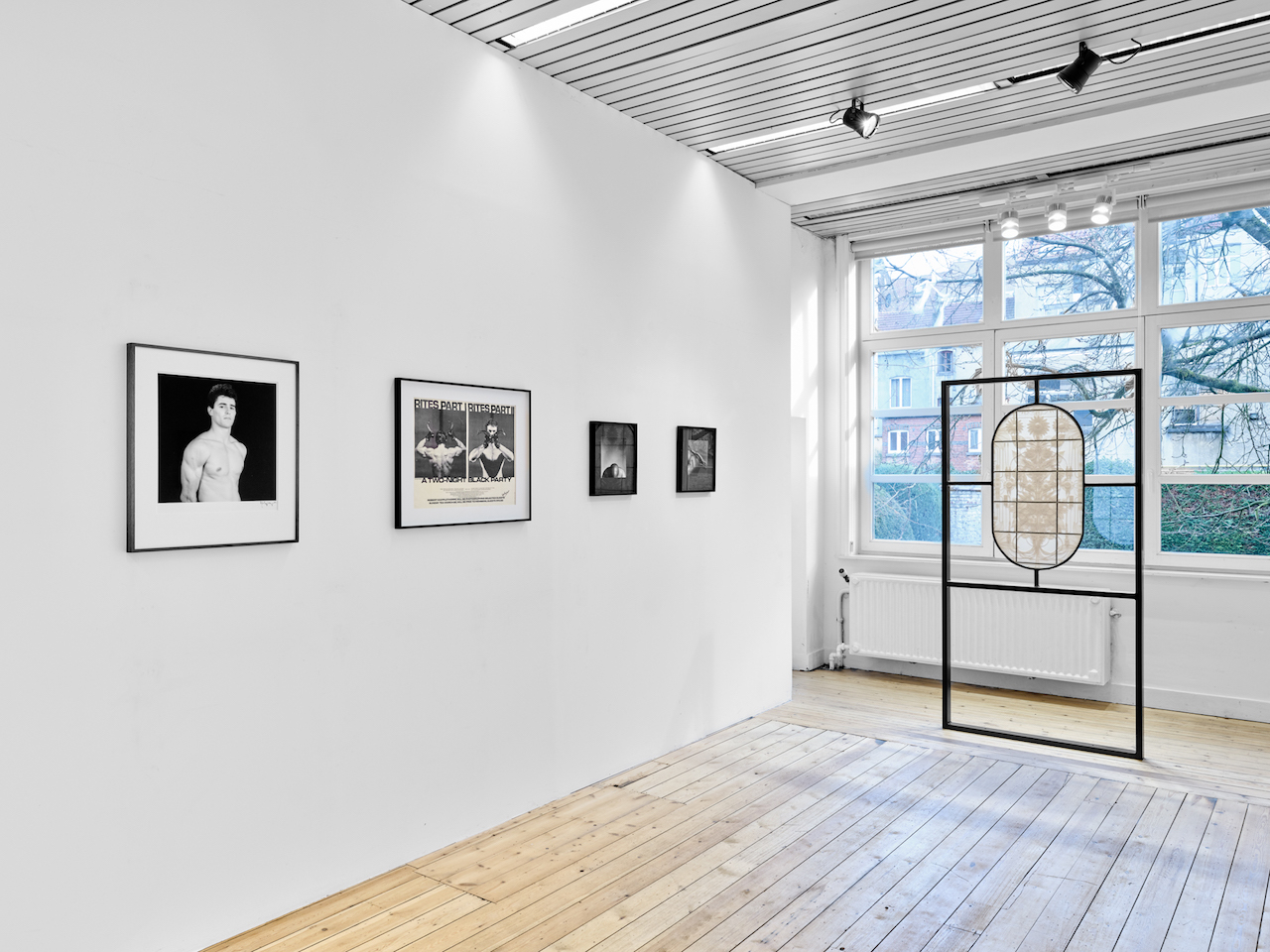
Exhibition view Robert Mapplethorpe & Herbert Tobias, Galerie Eric Mouchet Brussels © We Document Art_11
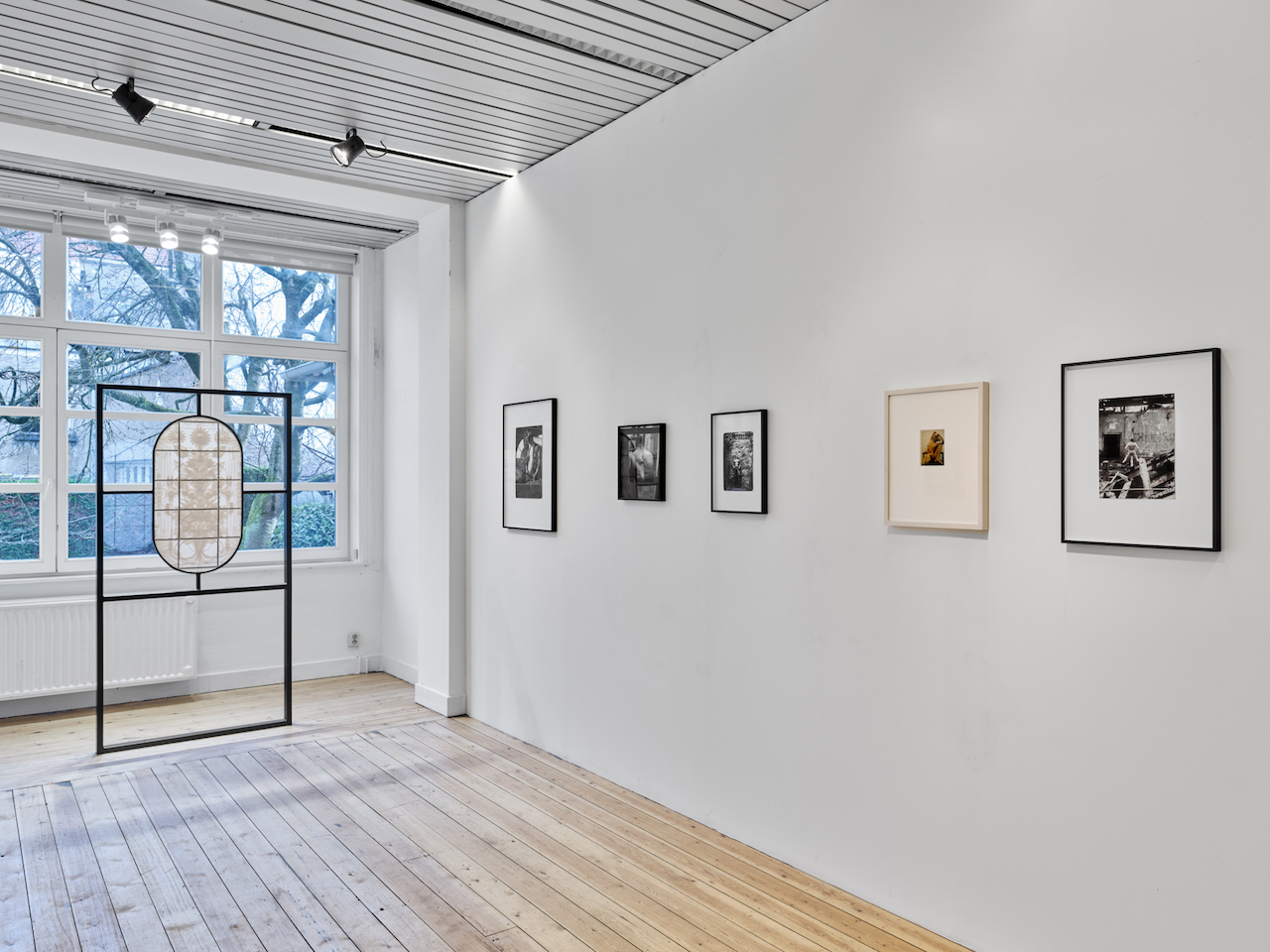
Exhibition view Robert Mapplethorpe & Herbert Tobias, Galerie Eric Mouchet Brussels © We Document Art_12
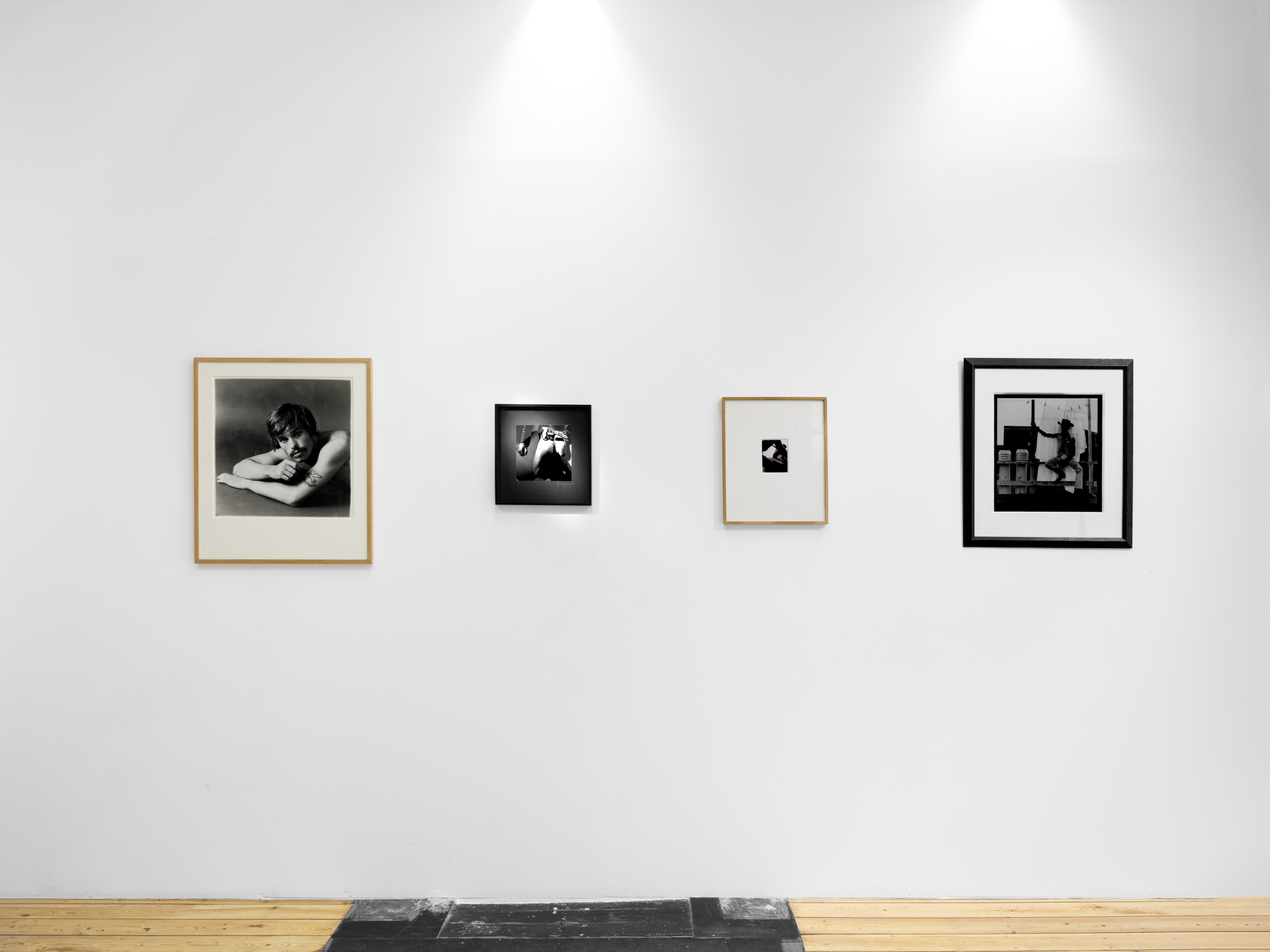
Exhibition view Robert Mapplethorpe & Herbert Tobias, Galerie Eric Mouchet Brussels © We Document Art_16
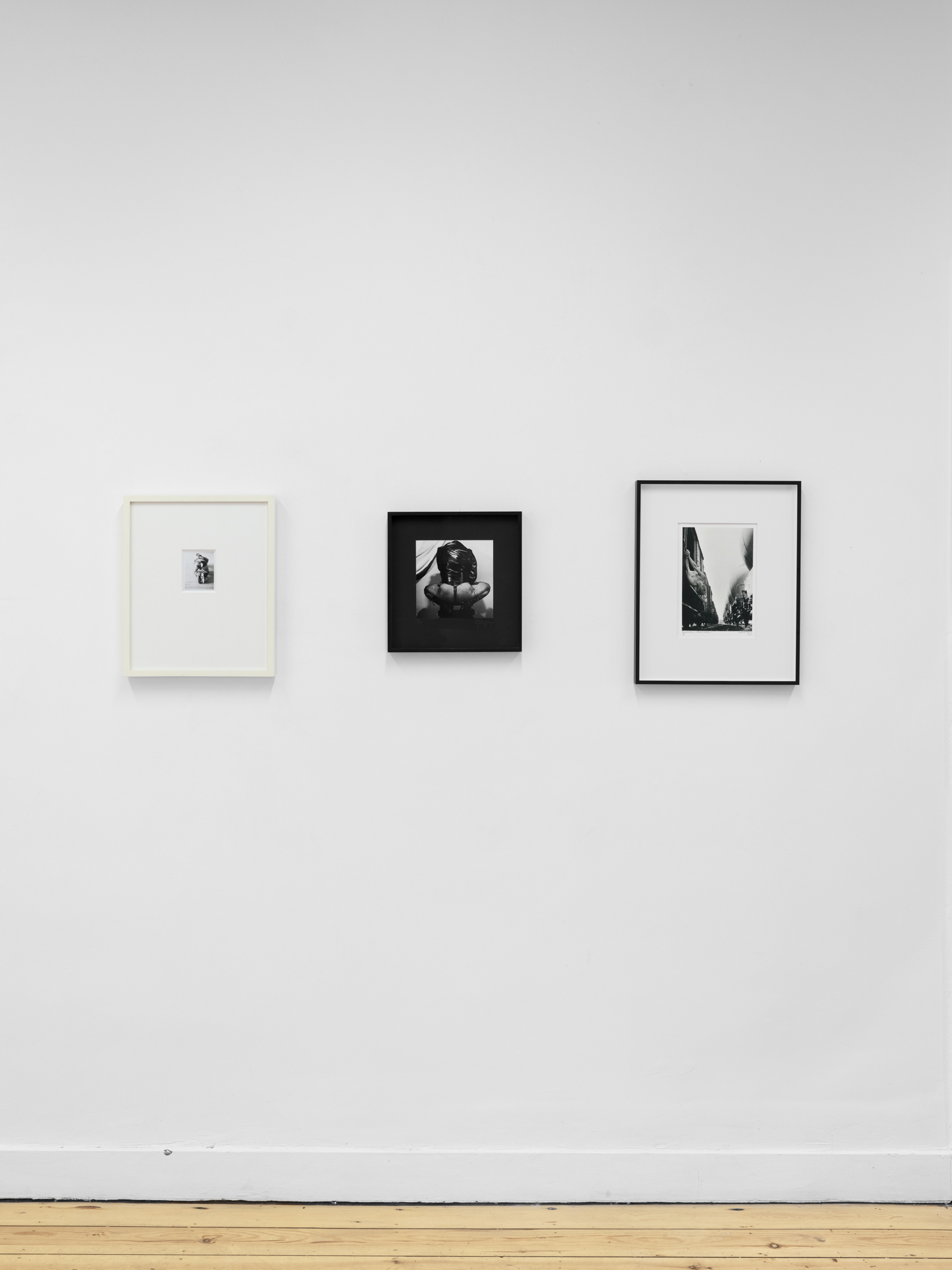
Exhibition view Robert Mapplethorpe & Herbert Tobias, Galerie Eric Mouchet Brussels © We Document Art_17
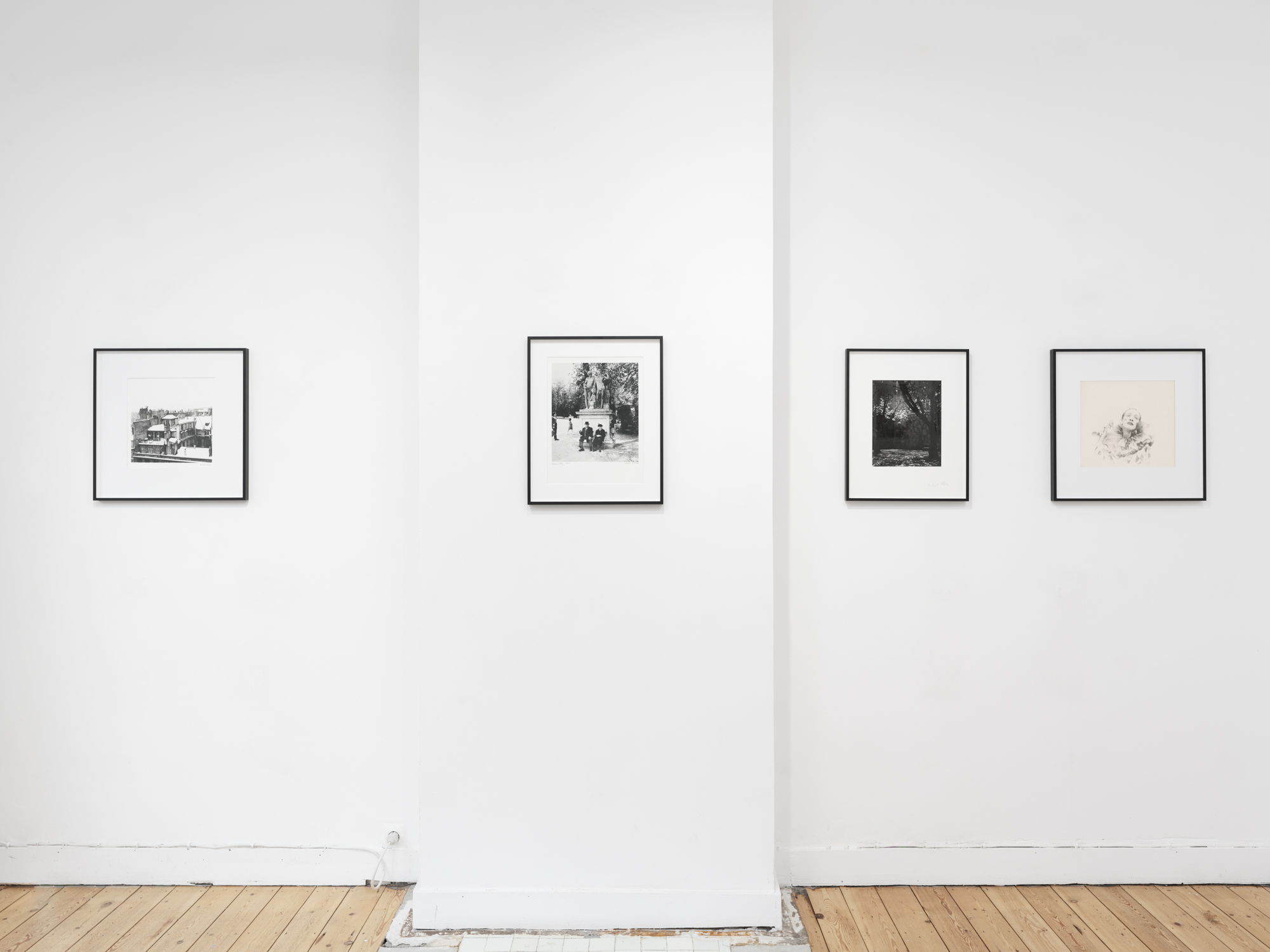
Exhibition view Robert Mapplethorpe & Herbert Tobias, Galerie Eric Mouchet Brussels © We Document Art_19
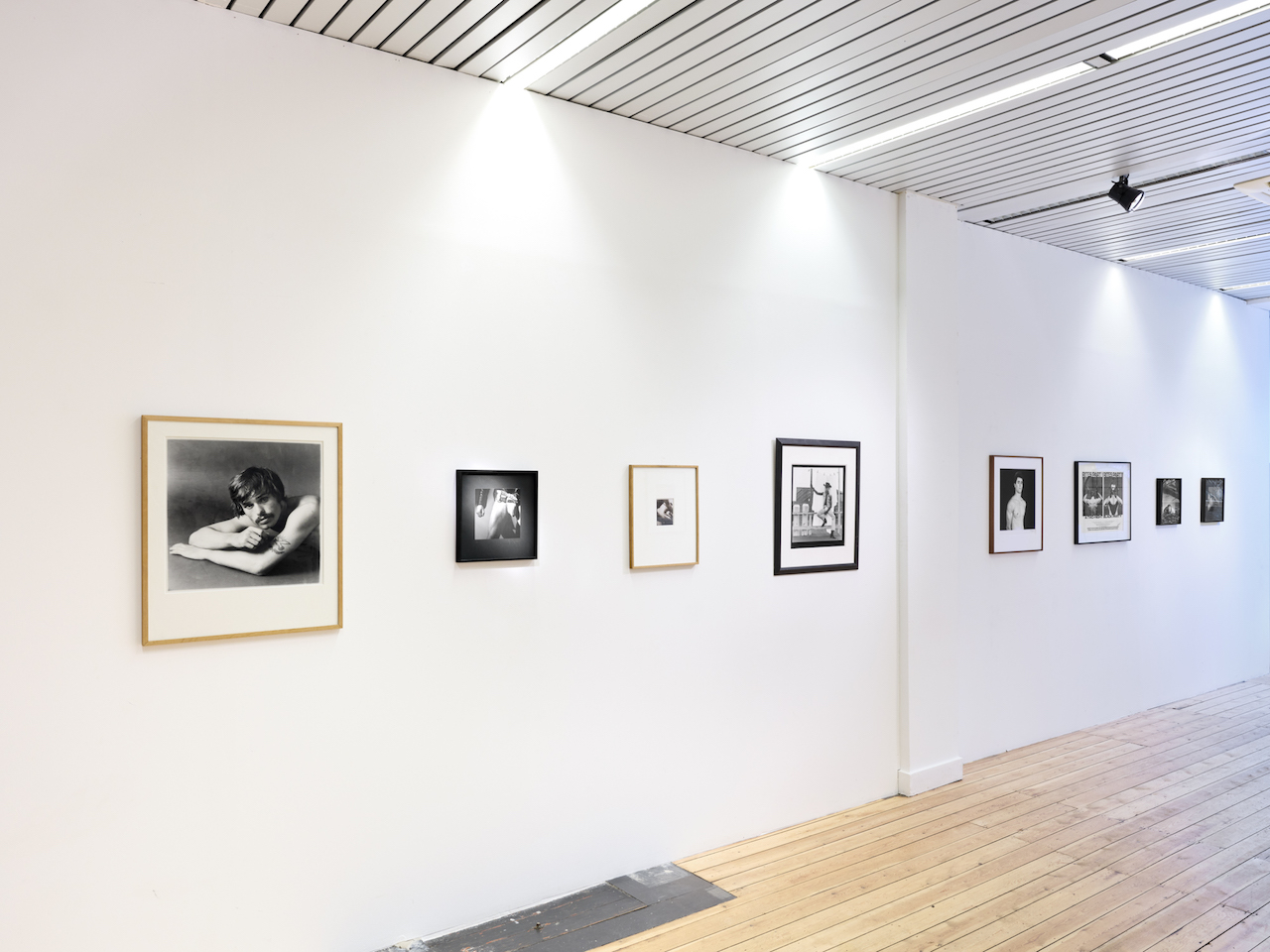
Exhibition view Robert Mapplethorpe & Herbert Tobias, Galerie Eric Mouchet Brussels © We Document Art_20
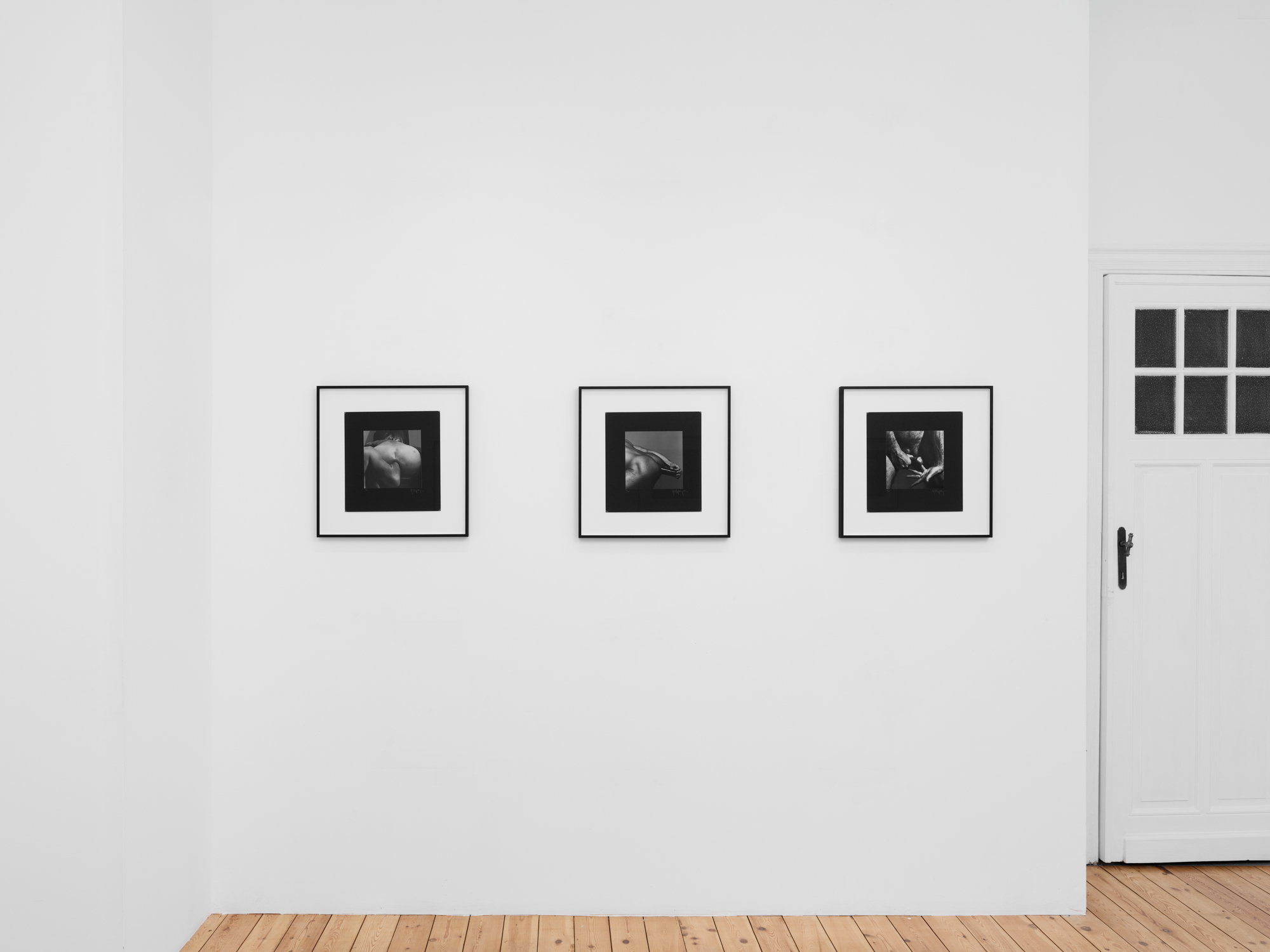
Exhibition view Robert Mapplethorpe & Herbert Tobias, Galerie Eric Mouchet Brussels © We Document Art_21
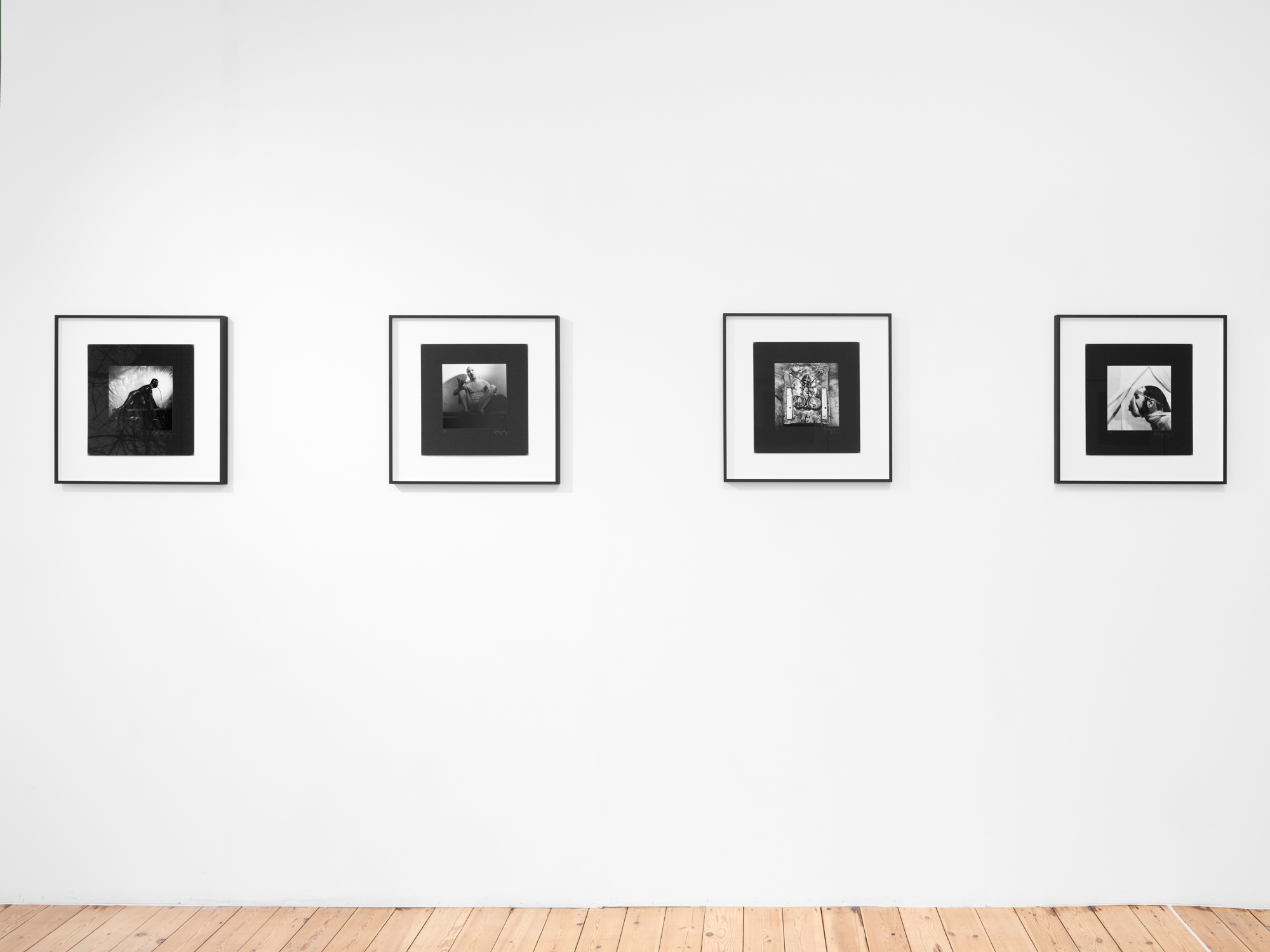
Exhibition view Robert Mapplethorpe & Herbert Tobias, Galerie Eric Mouchet Brussels © We Document Art_22
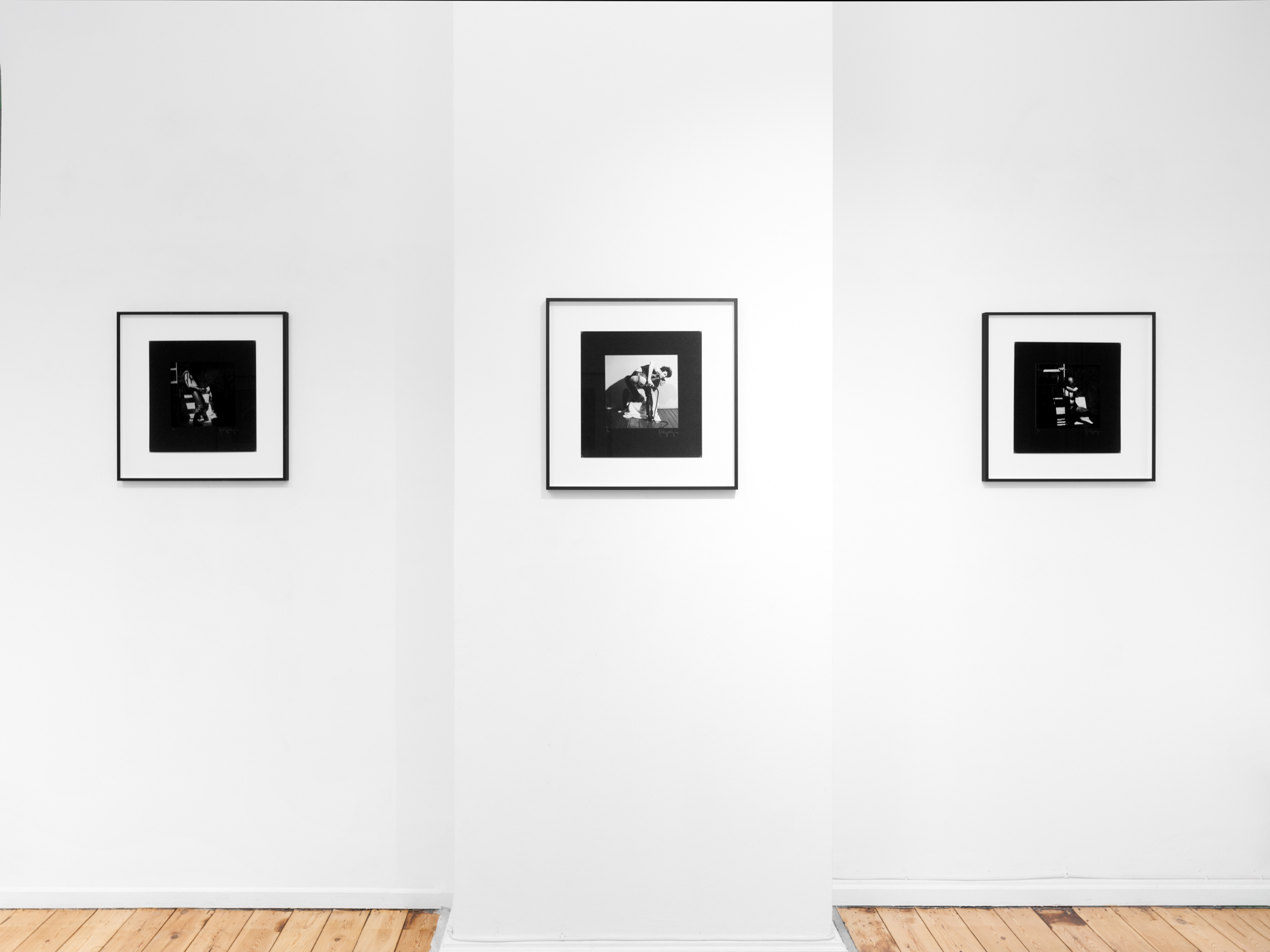
Exhibition view Robert Mapplethorpe & Herbert Tobias, Galerie Eric Mouchet Brussels © We Document Art_23
Untitled (self-portrait), Invitation to Don’t touch here, LIght Gallery opening, New York, January 1973_Robert Mapplethorpe © Bertrand Michau_2
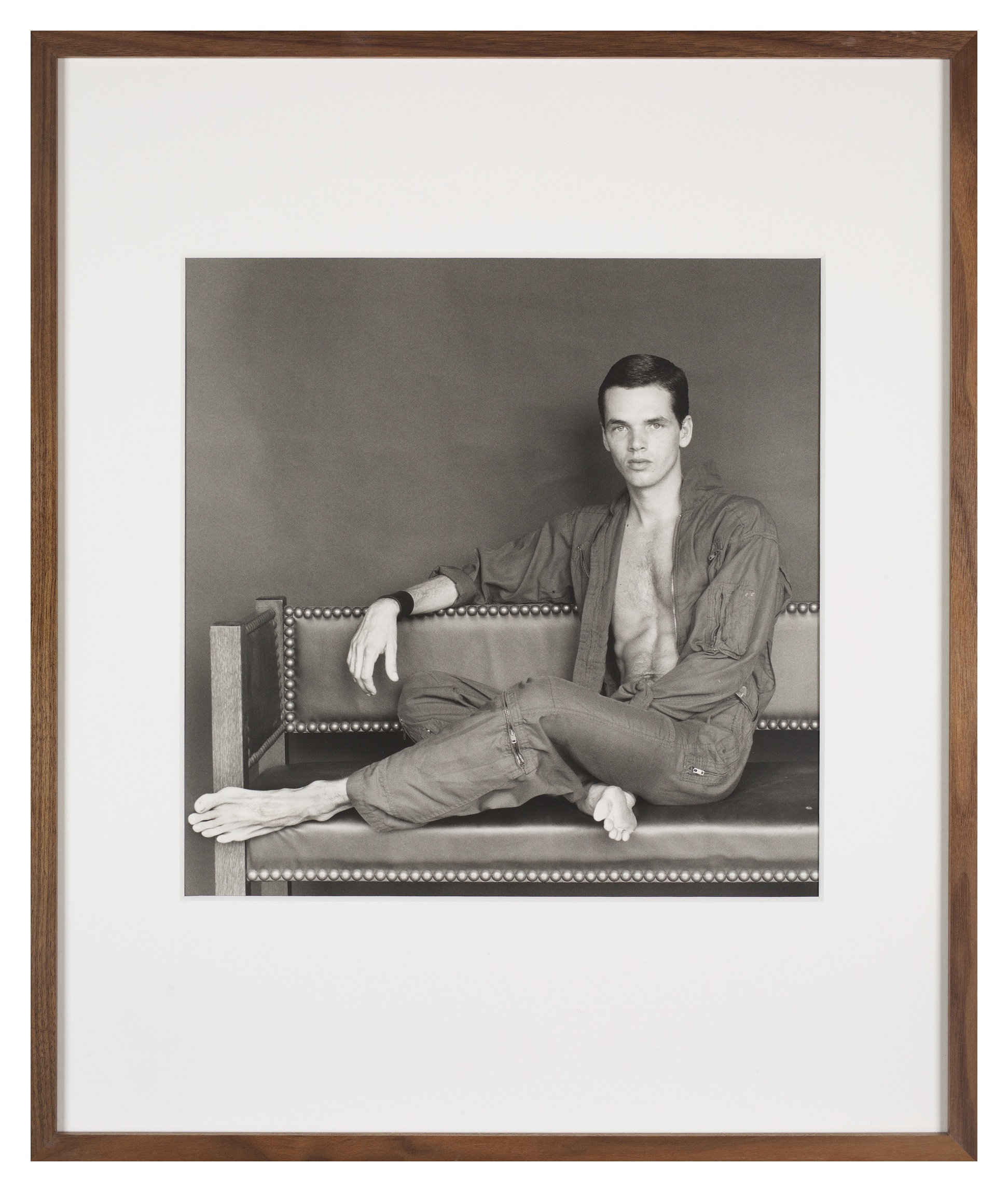
Marcus Leatherdale_1978_Robert Mapplethorpe © Bertrand Michau
Joe, NYC_1978 (tirage 1978)_The X Portfolio – Photo 6 de l’édition 14:25_Robert Mapplethorpe © Bertrand Hugues_2
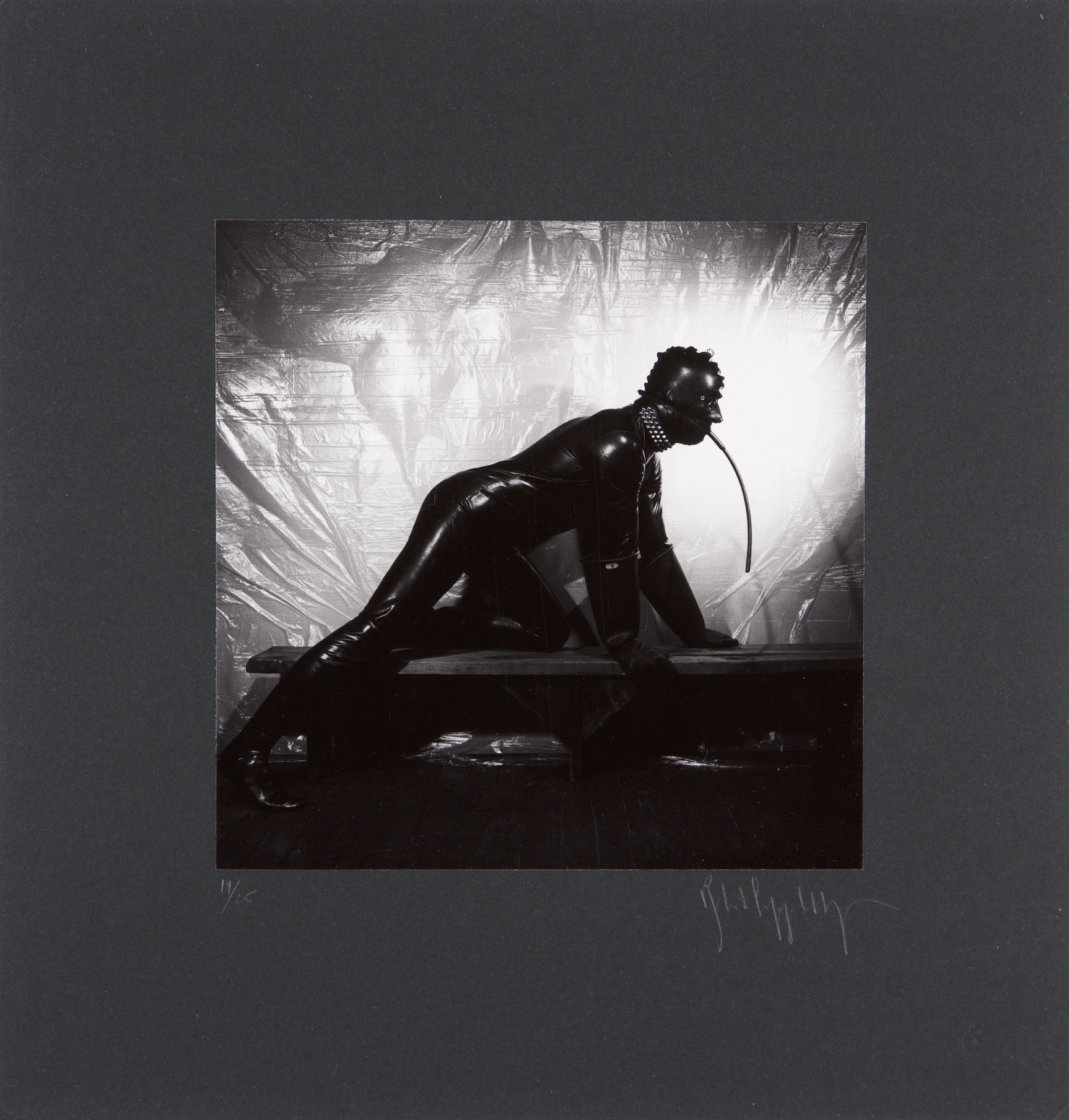
Helmut, NYC_1978 (tirage 1978)_The X Portfolio – Photo 8 de l’édition 15:25_Robert Mapplethorpe © Bertrand Hugues
Portraits, Paris_1952_Herbert Tobias © Bertrand Hugues__2
Claude sensuell, Paris_1952_Herbert Tobias © Bertrand Hugues.jpg_2
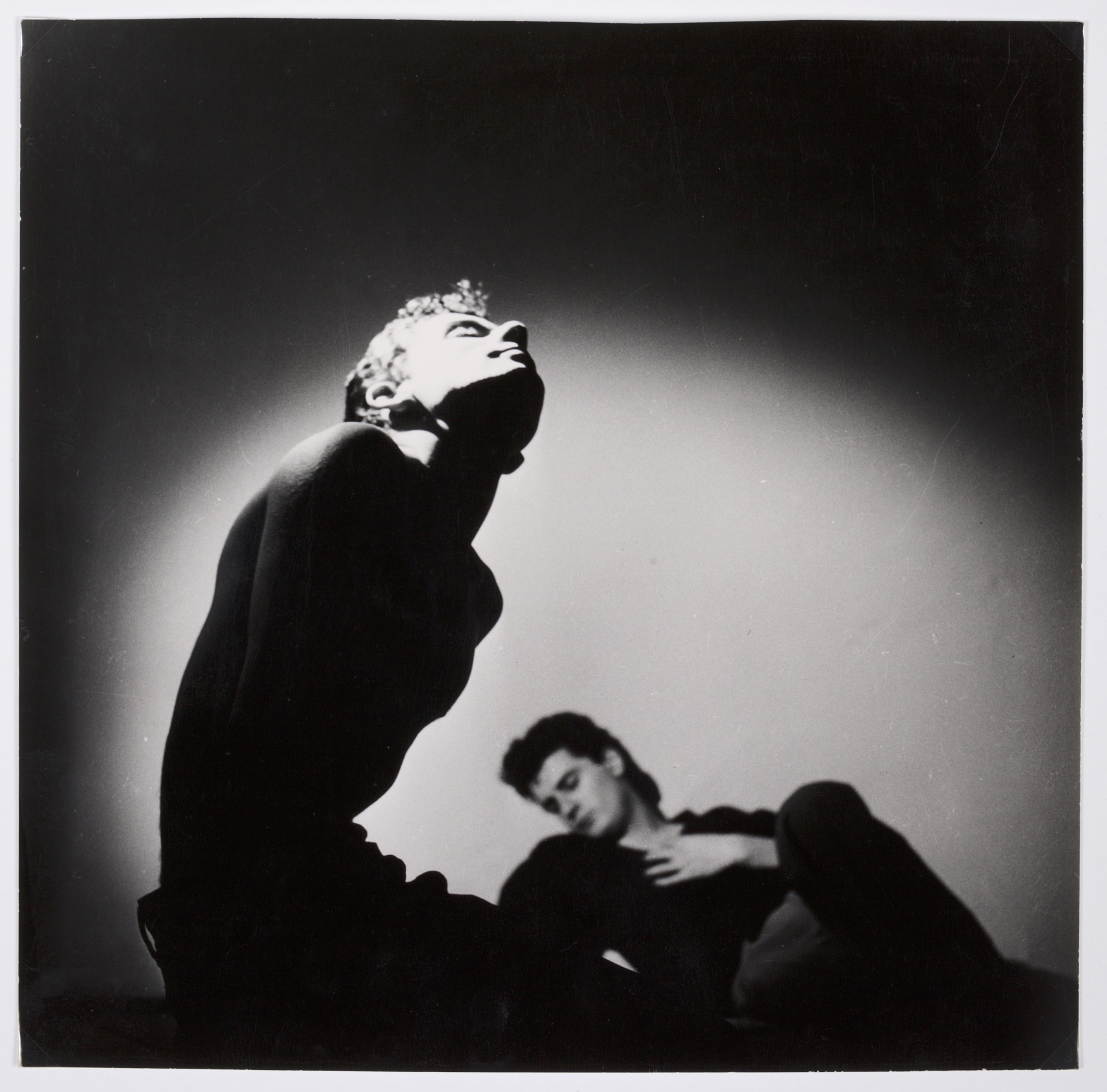
Cigarette, Paris_1951_Herbert Tobias © Bertrand Hugues
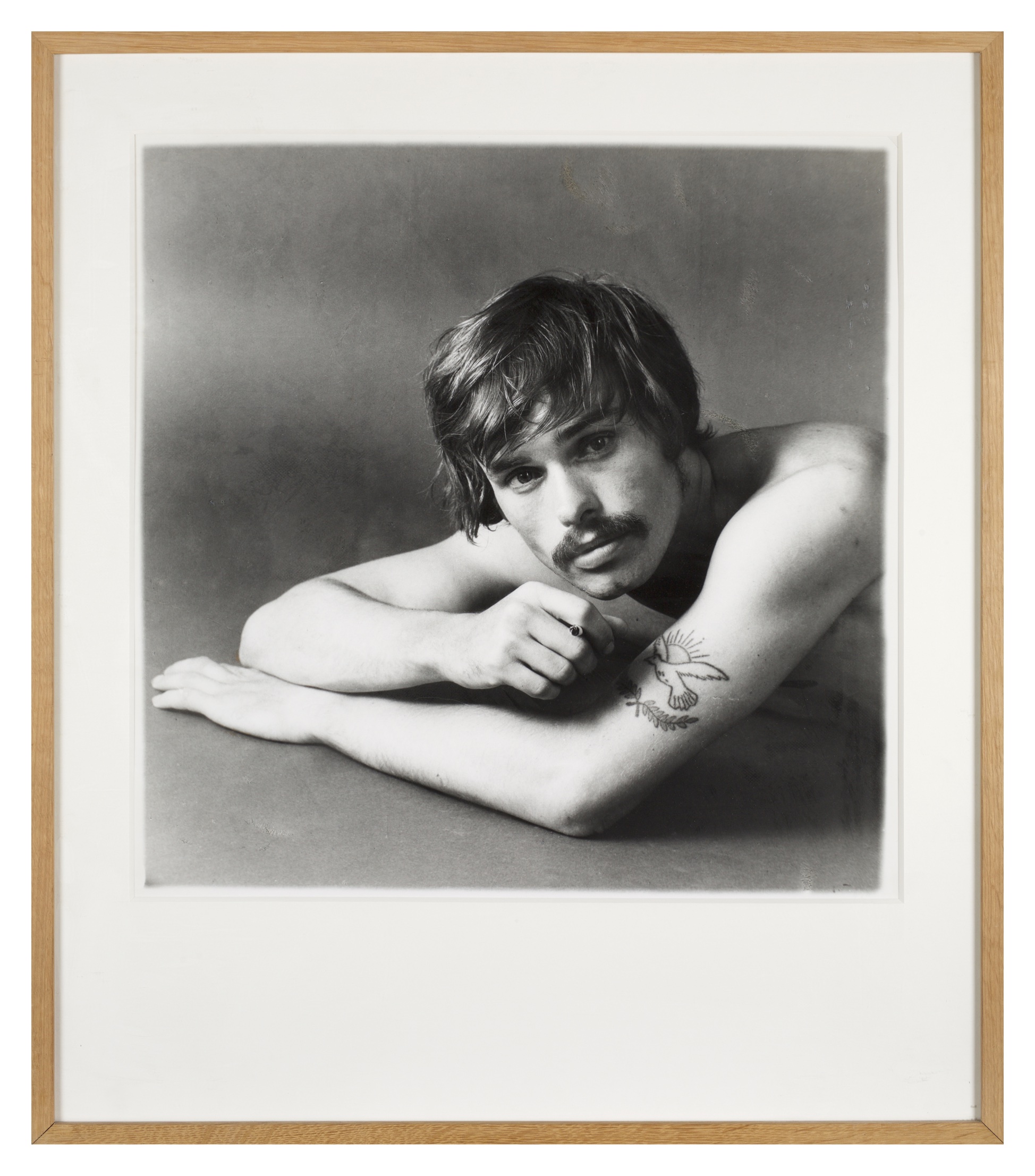
Amsterdam without return IX_1981_Herbert Tobias © Bertrand Hugues_2_