
Ham Sāya Kouh Hā – By the Shade of the Mountain
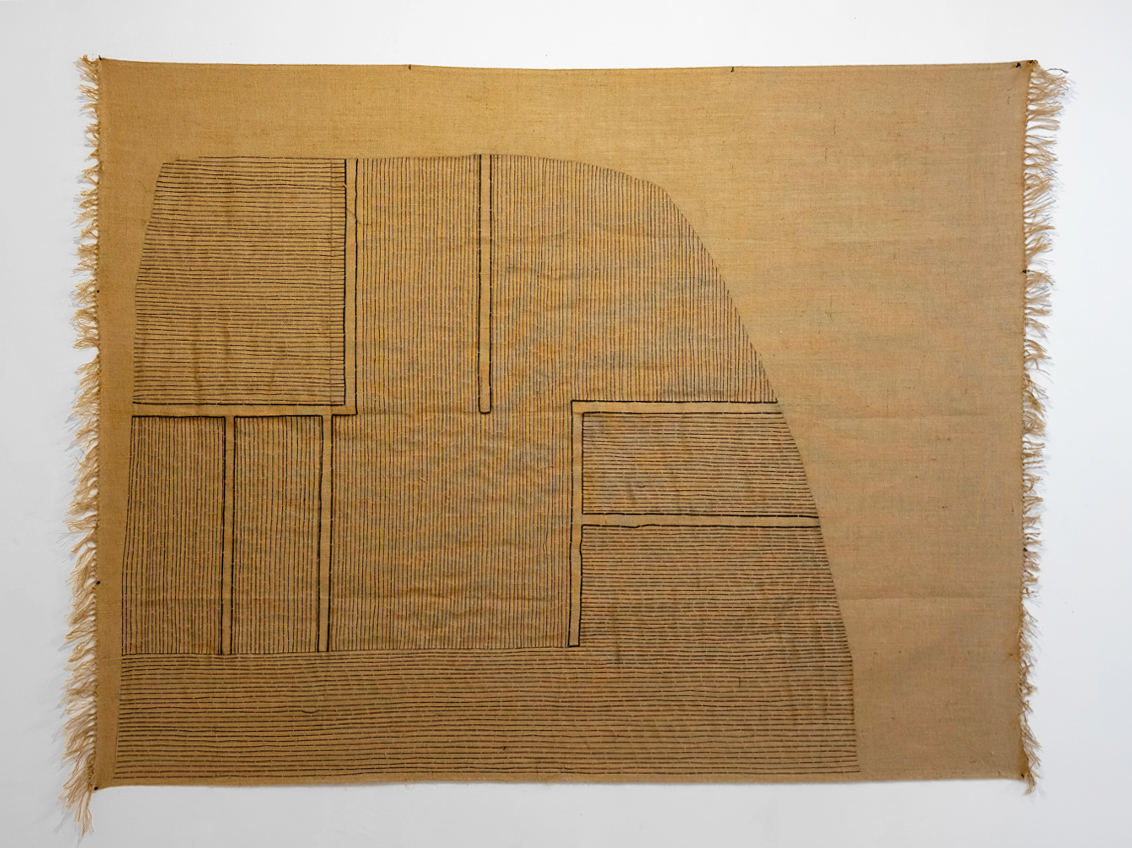
In the wake of the work and commitment of visual and performance artist Kubra Khademi, Galerie Éric Mouchet brings together, for the first time in Europe, eleven contemporary Hazāra artists originally from Afghanistan, Iran, and Pakistan. The exhibition invites to explore singular artistic worlds, reflections of a collective destiny, where textile pays homage, memory is written in red, and resistance in miniature.
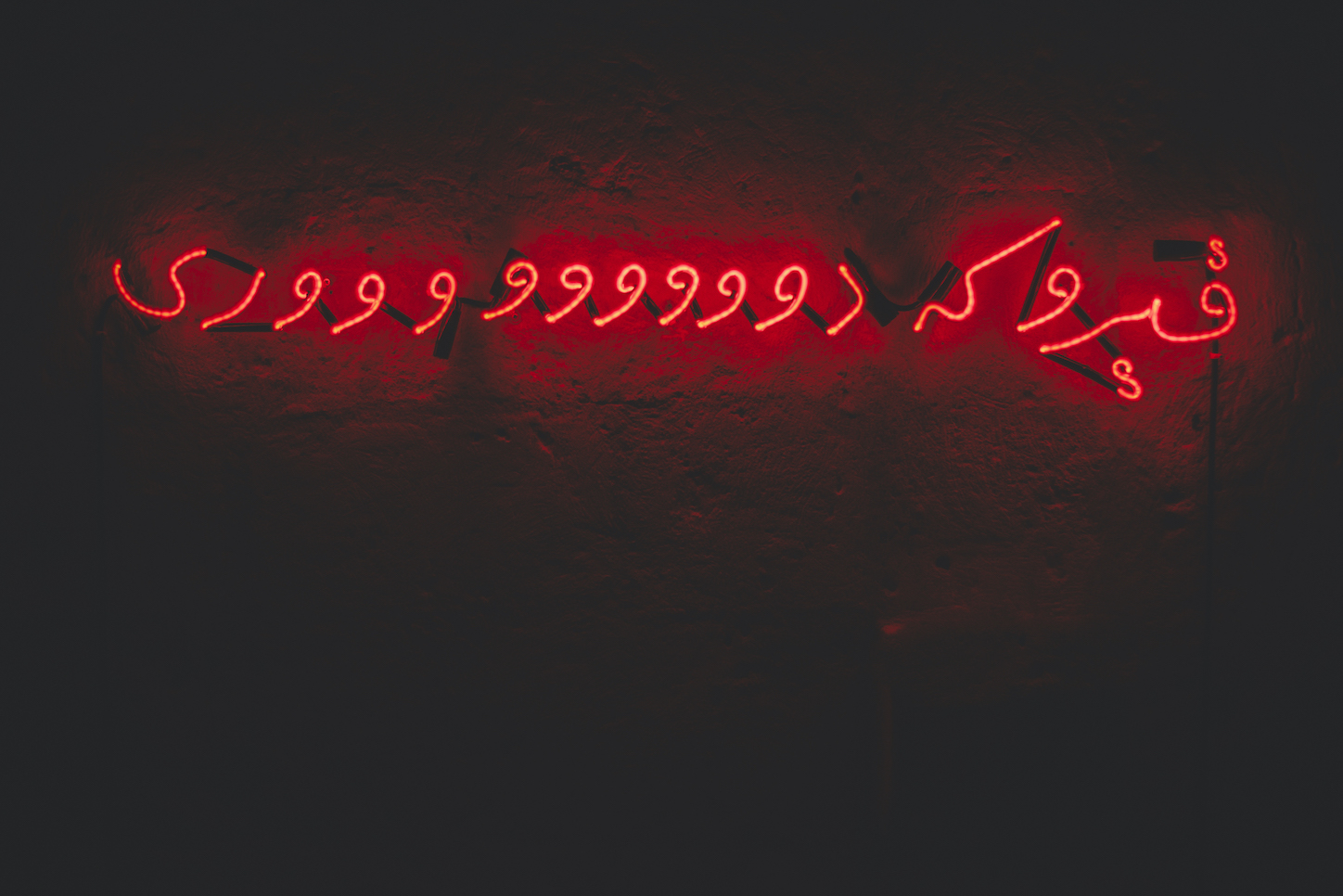
As age-old myths, family legends, and biographical narratives pass by, the landscapes of Hazārajat, Kabul and Quetta unfold in the background, along with scenes from the Bāmiyān Valley, where two gigantic 6th-century-old buddhas once stood. Blown up by the Taliban in 2001, they left two voids in the cliffs. And for many Hazāras, the image of a wounded mountain remains—a symbol of remembrance and an allegory of resistance—to which the work of poet and visual artist Elyas Alavi seems to speak. Qayro ke douuuuuuuuuri (Alas, you are faaaaaaaaar away) is a landscape-phrase, the simple expression of a nostalgia that radiates and travels like an echo. A political and spiritual sanctuary against violence, mountains become throughout the exhibition an emotional fabric upon which the artworks weave and assemble pain and gentleness, nostalgia and oblivion, ardor and candor. They end up forming a geo-poetical cartography of hope and remembrance, reflecting the oppression, struggles, and aspirations of the Hazāra community.
Ham Sāya Kouh Hā draws from the geographical and mental progression across a paradoxical landscape—half refuge, half dead end. From arid slopes to fertile furrows, from scarred neighborhoods to blooming hills, the exhibition sketches a panorama of identity and artistic ridgelines. All the way from the immersion suggested by Feroza Hakeem within a nature that encapsulates loss and memory, to the ultimate gathering under the combative banner of Kubra Khademi, and through the patient memorial gestures of Latifa Zafar Attaii, and the modest search for origins within the layers of oral and familial history initiated by Parwana Haydar, artists collectively lean towards this horizon like a mirage, so close and yet so far, known in Persian as the “mountain behind the mountains.”[1]
The artworks presented here come from Melbourne, Kabul, and Quetta. From the shores of the Mediterranean, London, and the outskirts of Tehran. They are discreet yet meaningful fragments of an ongoing archival effort, of an intimate, collective, and resolutely political emancipation quest. Just like stones and soil that together birth mountains, they settle, layer, and endure.
Emile Drousie
With works by:
Elyas Alavi
Sher Ali
Feroza Hakeem
Parwana Haydar
Ibrar Hussain
Fati Khademi
Kubra Khademi
Fazil Mousavi
Ali Rahimi
Mohammad Sabir Sabir
Mohsin Taasha
Latifa Zafar Attaii
[1] Ramin Mazhar, “Mountain,” in Love, Exile, Freedom: The Revolt of Afghanistan’s Poets, 2025, Calmann-Lévy. (Translated from Persian by Belgheis Alavi)
MORE INFORMATIONS:
// Press Kit
// Ham Sāya Kouh Hā – Du côté de la montagne, à l’ombre (24.01-07.03.2026) | Paris
Category:
Exhibitions
Elyas Alavi, Qayro ke douuuuuuuuuri (Alas, You Are Faaaaaaaaar Away), 2024. Courtesy of the Artist © Gor Monton
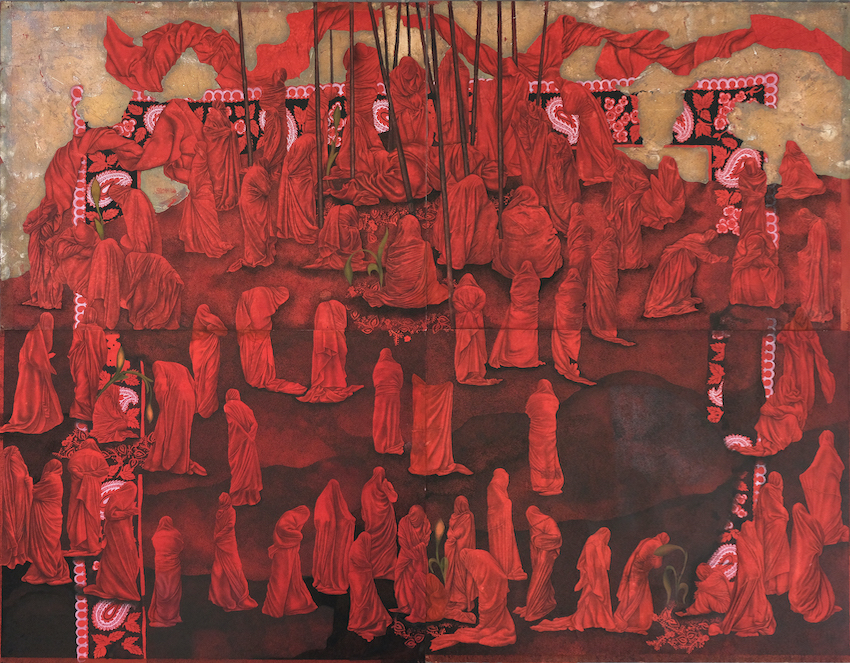
Mohsin Taasha Tappa-e Shuhada Roshnaaie [Hill of Martyrs of Enlightenment] from Rebirth of the Reds series, 2022. Courtesy of the Artist
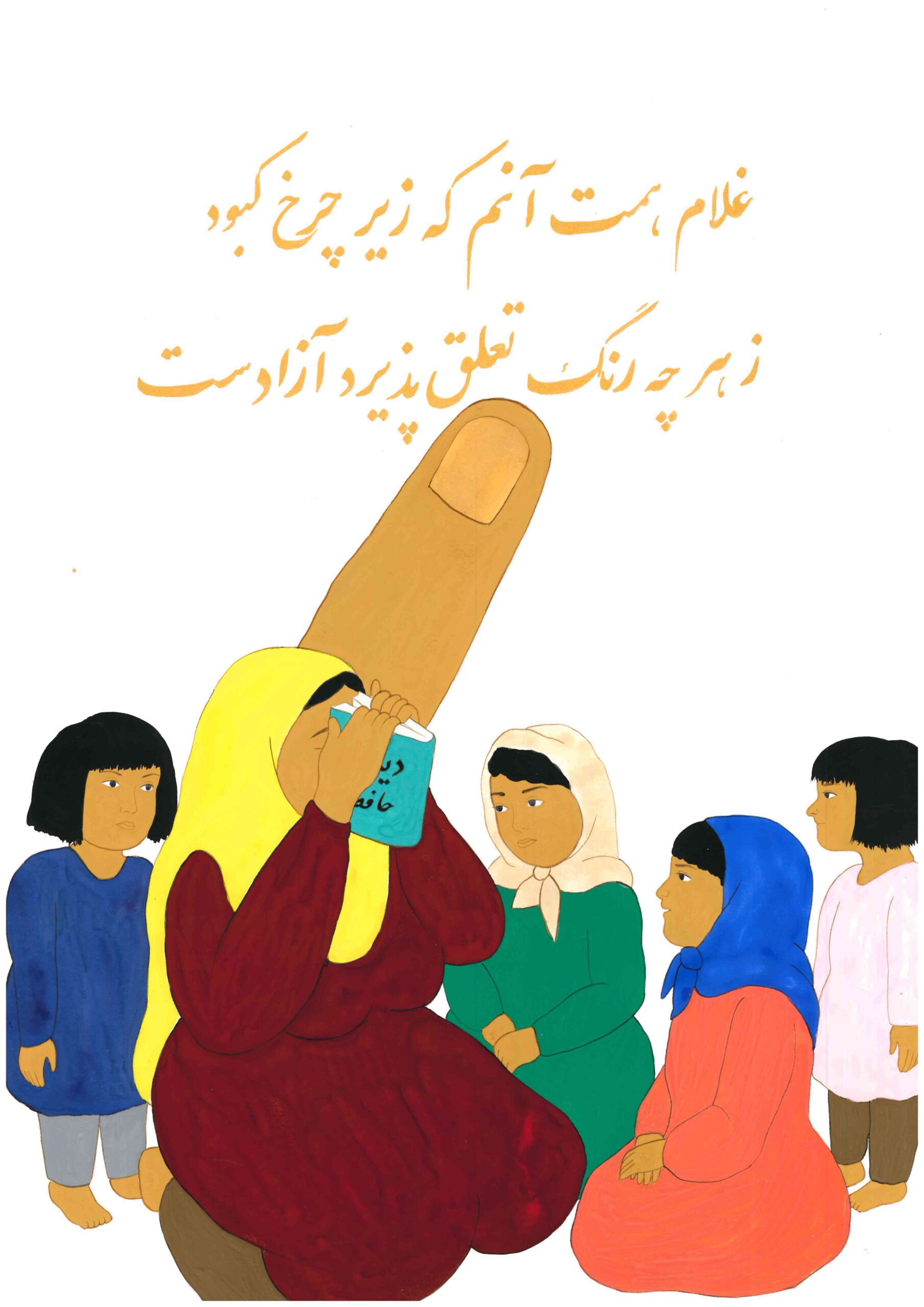
Kubra Khademi, La fille et le dragon #187, 2023. Courtesy the Artist & Galerie Eric Mouchet
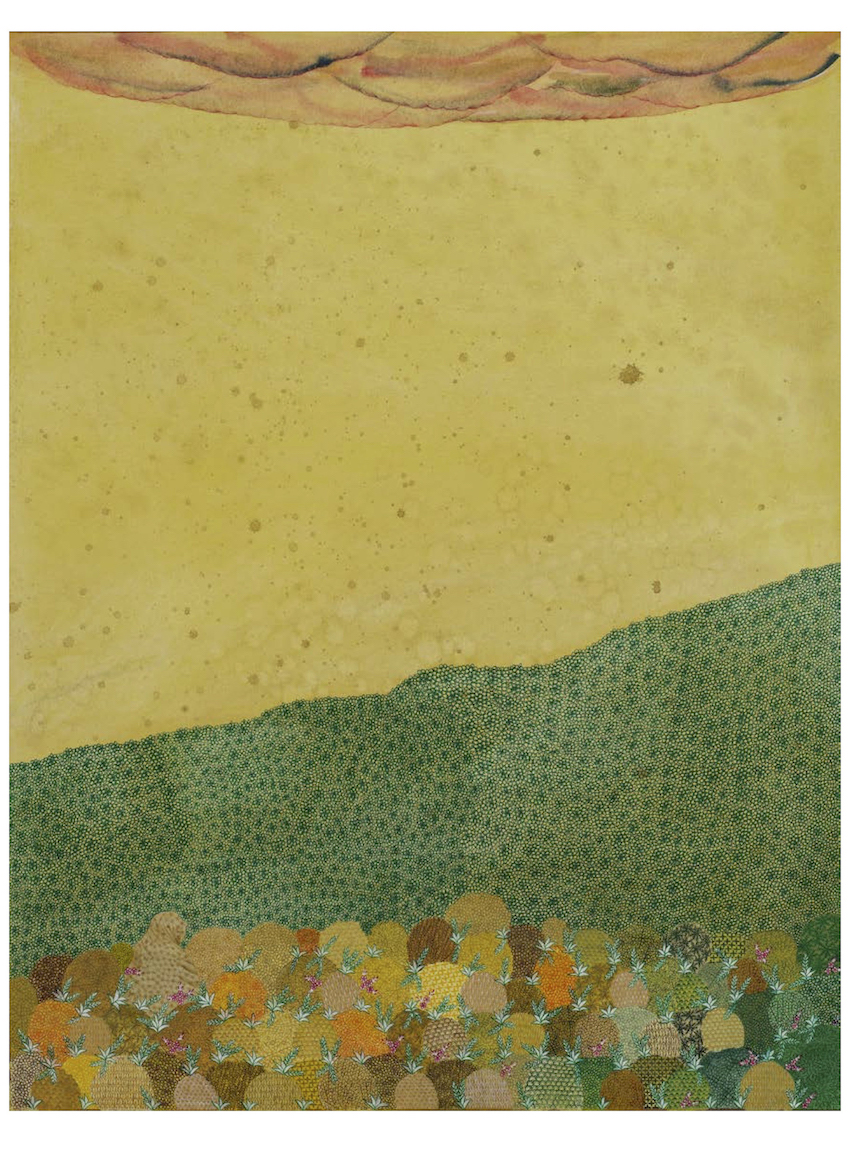
Feroza Hakeem, Montazer shomaast 1 (Waiting For You 1), 2025. Courtesy of the Artist & Pristine Contemporary, New Delhi
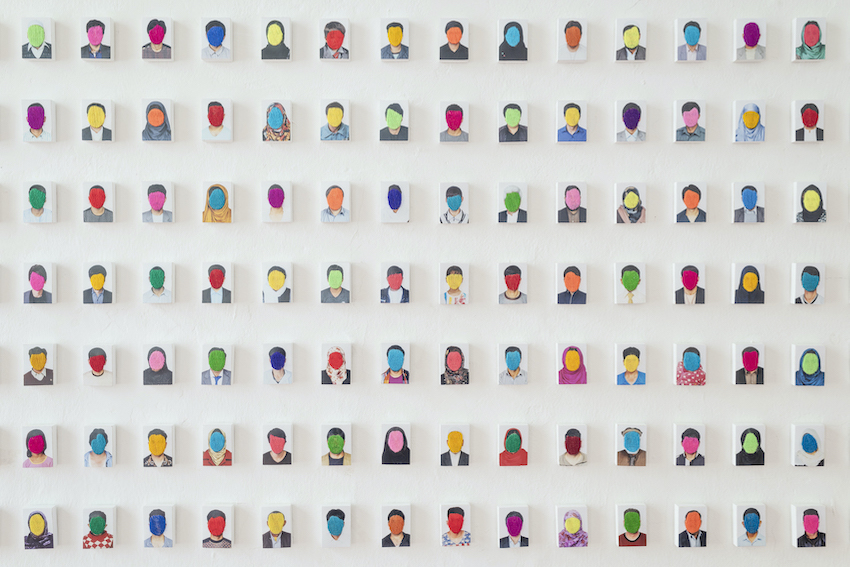
Latifa Zafar Attaii, Thousand Individuals, 2022. Courtesy of the Artist © Matteo Losurdo
Parwana Haydar, House of History, 2025. Courtesy of the Artist, Jerwood Foundation and Somerset House Studios

Sher Ali, Lasso Dynasty, 2023. Courtesy the Artist
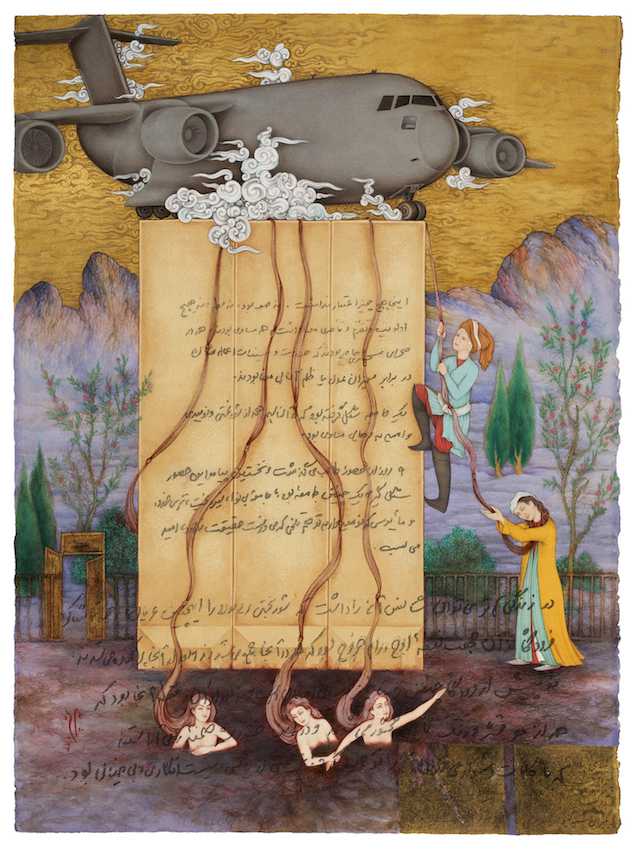
Fati Khademi, A Home in Outline, 2024