
Heimatmuseum of Modern Art
Ella Bergmann Michel – Robert Michel
ELLA BERGMANN-MICHEL
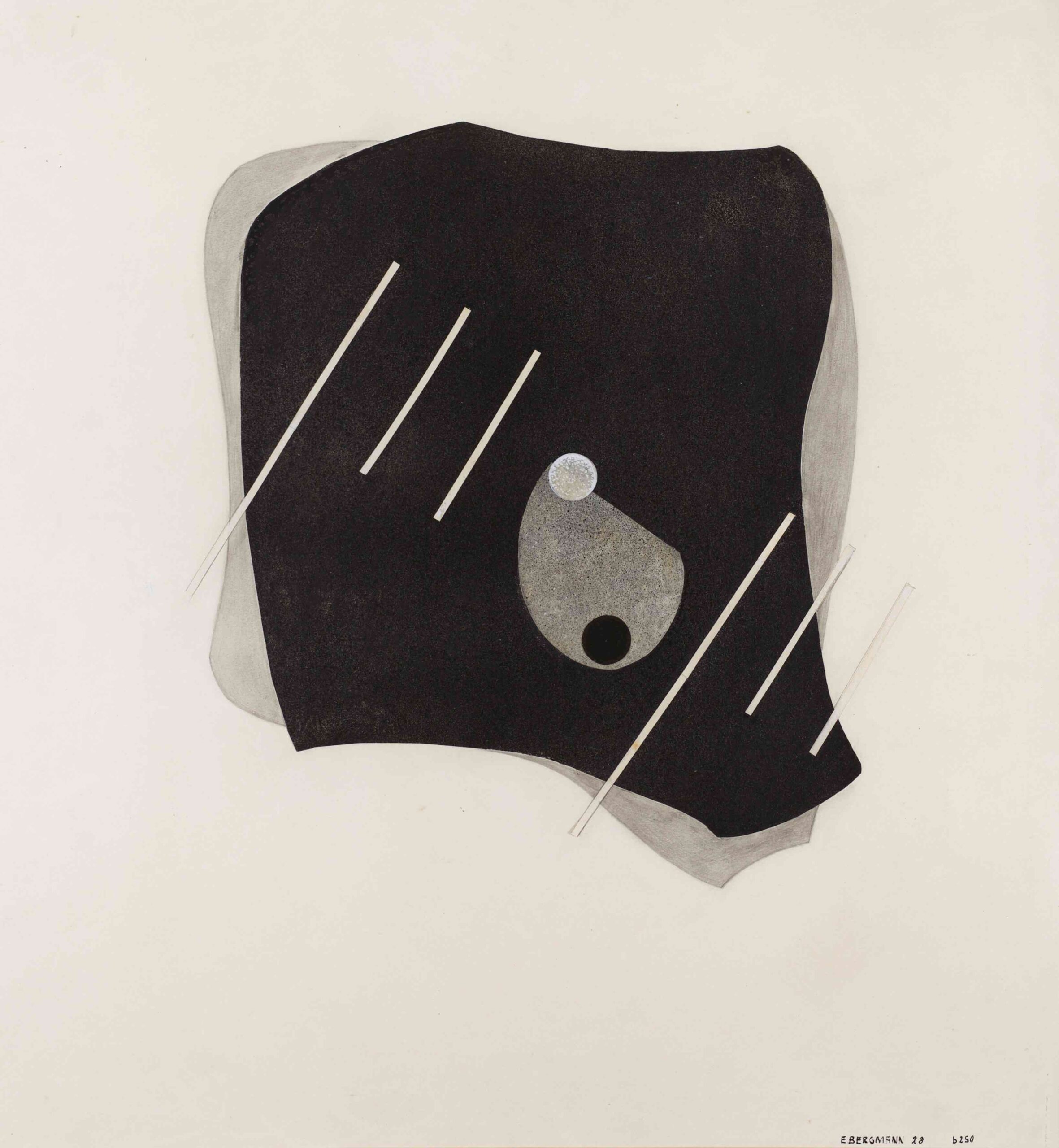
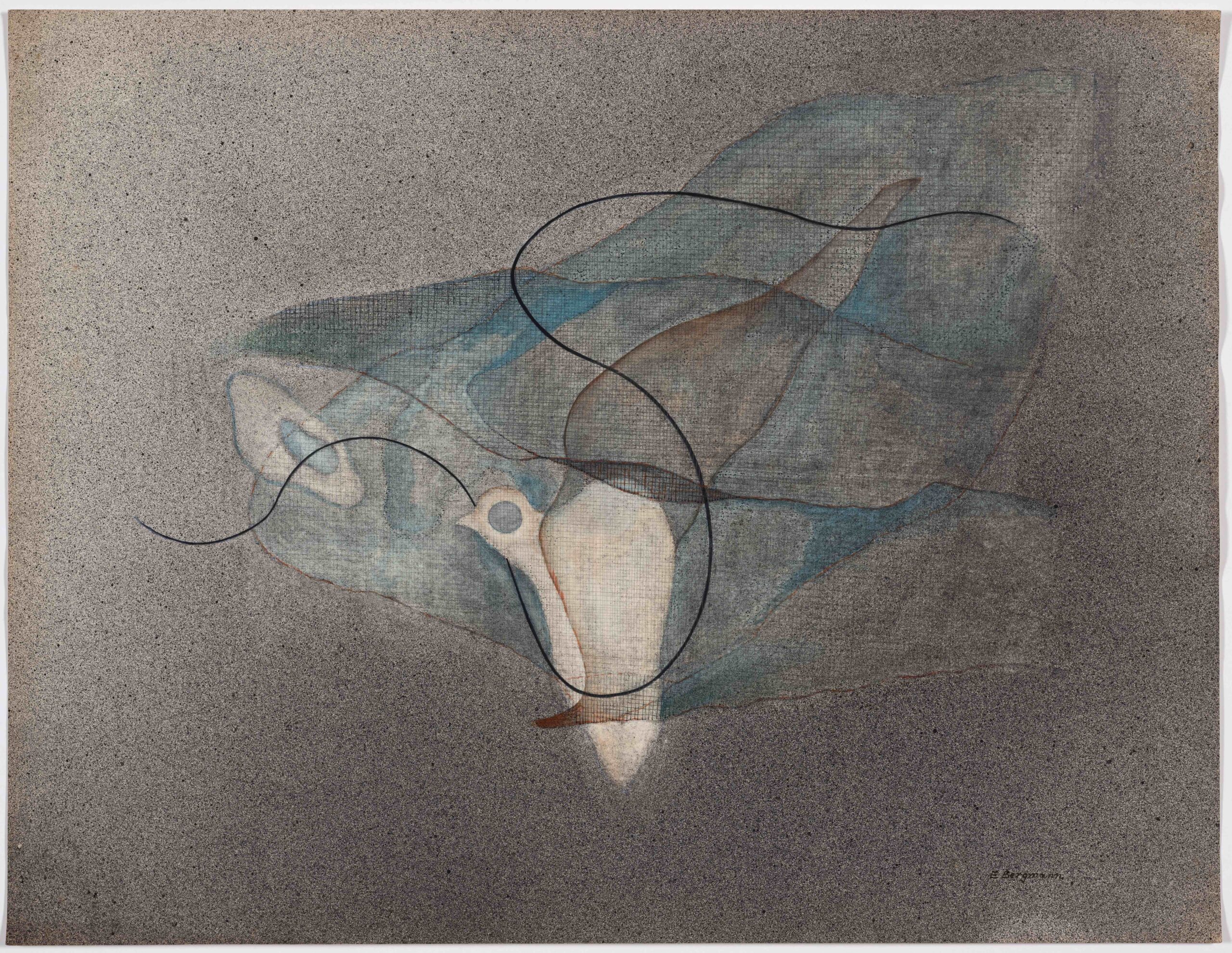
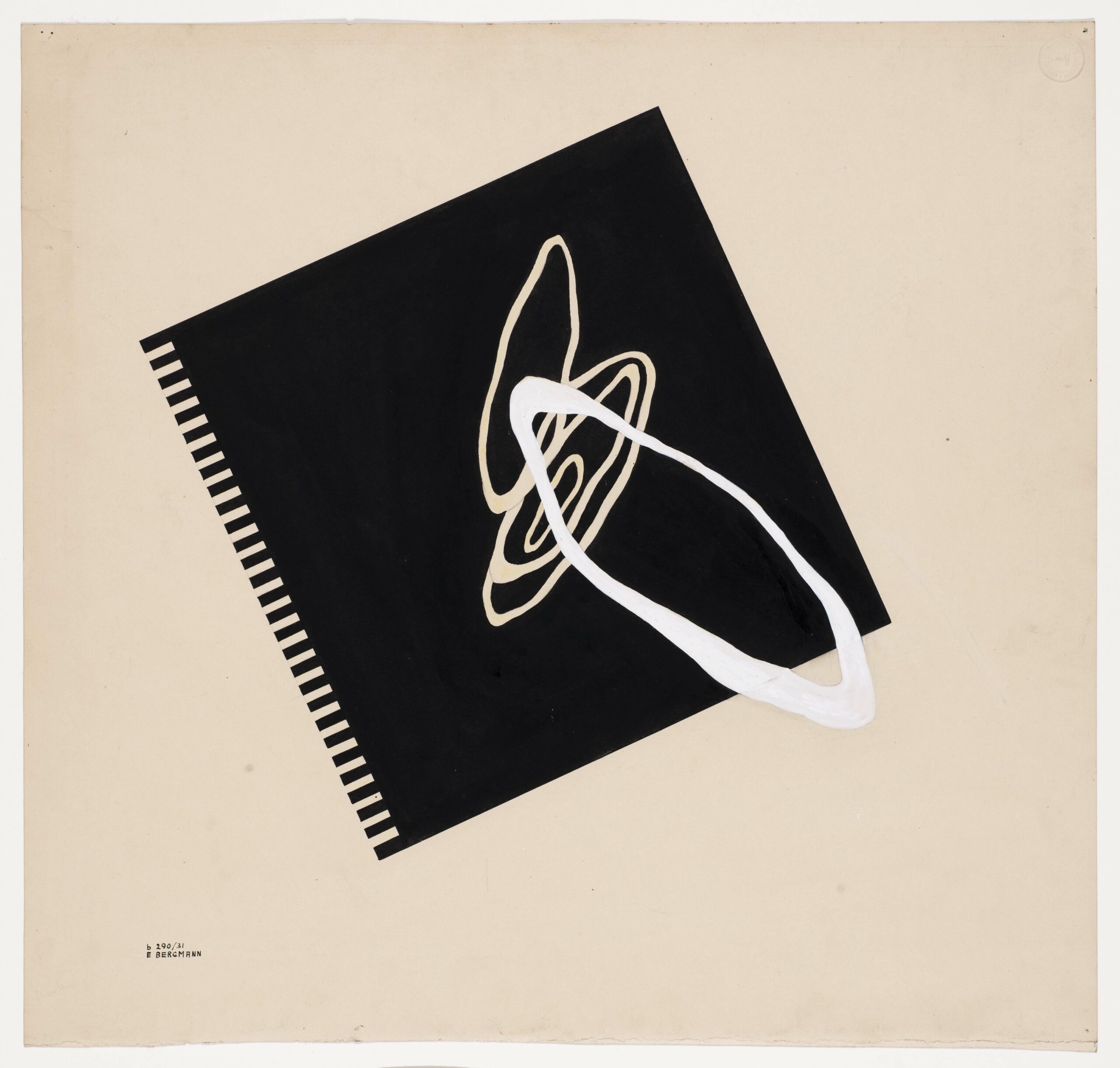
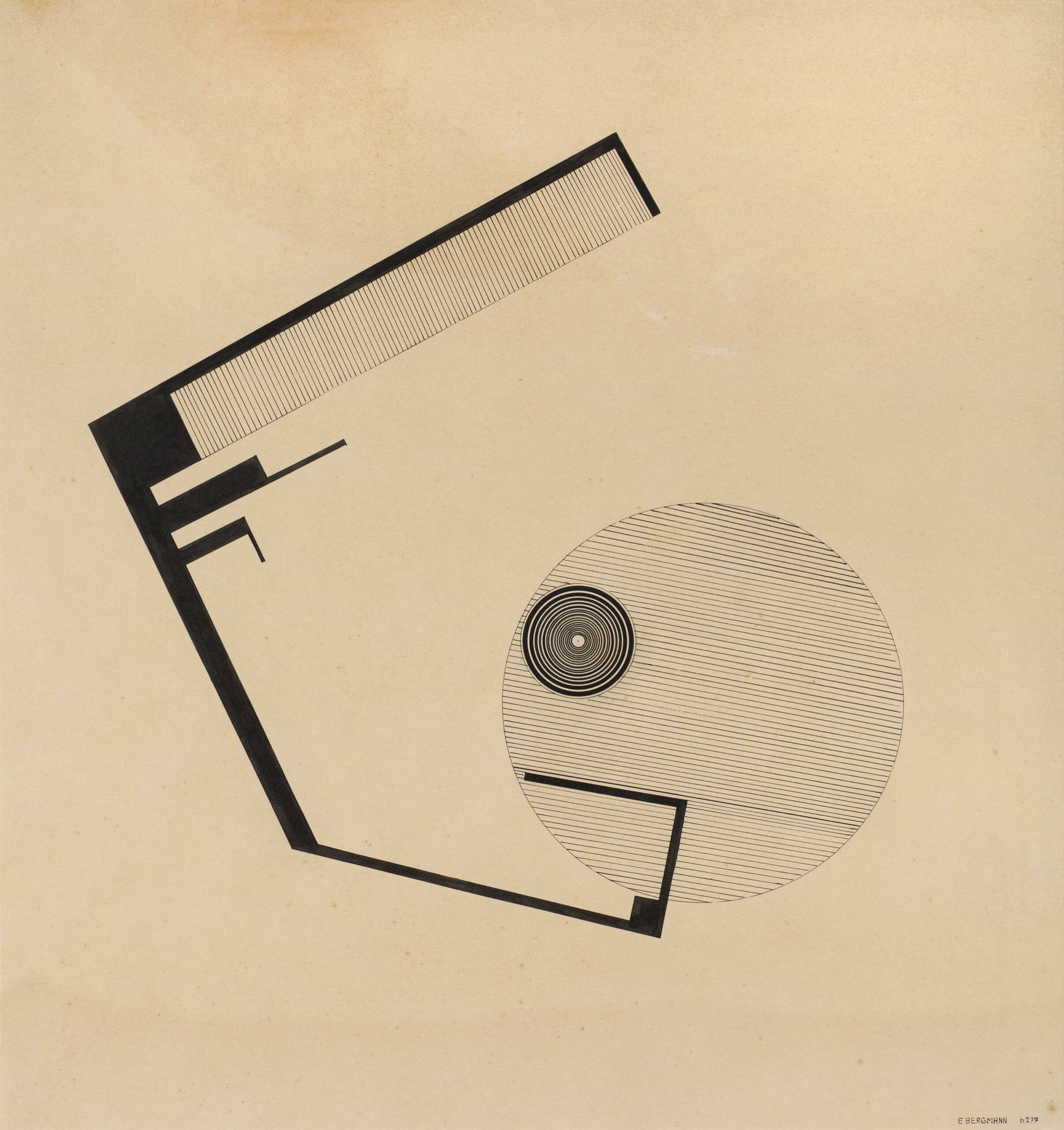
Ella Bergmann-Michel (1896-1971) is one of the most important and original artists of the German avant-garde of the 20th century. Fascinated by music and art, she decided as early as 1915 to study art at the “Grand Ducal Saxon University of Fine Arts”. With her husband Robert Michel, she maintained a very close friendship with Kurt Schwitters and was also enrolled for a semester at the Bauhaus in Weimar. As early as the 1920s, she took part in numerous exhibitions in Germany and the USA with her artworks.
Like most well-known German artists of this era, Ella Bergmann also dealt with graphic design, typography, photography and film. Like her husband Robert Michel, Ella Bergmann-Michel has developed her personal style in a very short time and moves with her art in the areas of Dada, Constructivism and Purism. Due to the birth of her son, the greater financial security and almost certainly also because the Bauhaus was too formal in her eyes, she left Weimar after a short time and founded an independent studio with her husband near Frankfurt in the Taunus. Here she has the space to develop her ideas and to go her own way in art, photography and filmmaking.
During the Second World War, like her husband, Ella Bergmann-Michel was banned from working and classified as a degenerate artist. The entire early work of the two artists was produced within twenty years. Due to the rule of the National Socialists in Germany, the Michels stopped their artistic activities. In order to secure her livelihood, Ella Bergmann-Michel devoted herself to agriculture and small animal breeding.
After the war, she founded the “Film-Studio” in Frankfurt and gave lectures on the Blue Rider, Dadaism and the Bauhaus. In the 1960s she started again with making art. In addition to Japanese paper collages, a series of thread collage pictures are also created.
Galerie Eric Mouchet is pleased to exclusively represent the estate of the artist Ella Bergmann-Michel and her husband Robert Michel.
ROBERT MICHEL
After crashing his aircraft while he was a test pilot in 1916, the nineteen-year-old Robert Michel found a refuge in the Weimar school of Fine Arts where he was treated. Taking advantage of his convalescence surrounded by artists, he started to paint himself. His first landscapes, which beneficiated of his previous flying experience, are within the first ones in art history with
a bird’s eye view which emphasizes the brutalist vision of the city. Inspired by the Futurist way of representing movement and by the artist’s passion for speed and modern technology, his work since then appeared to be full of mechanical references.
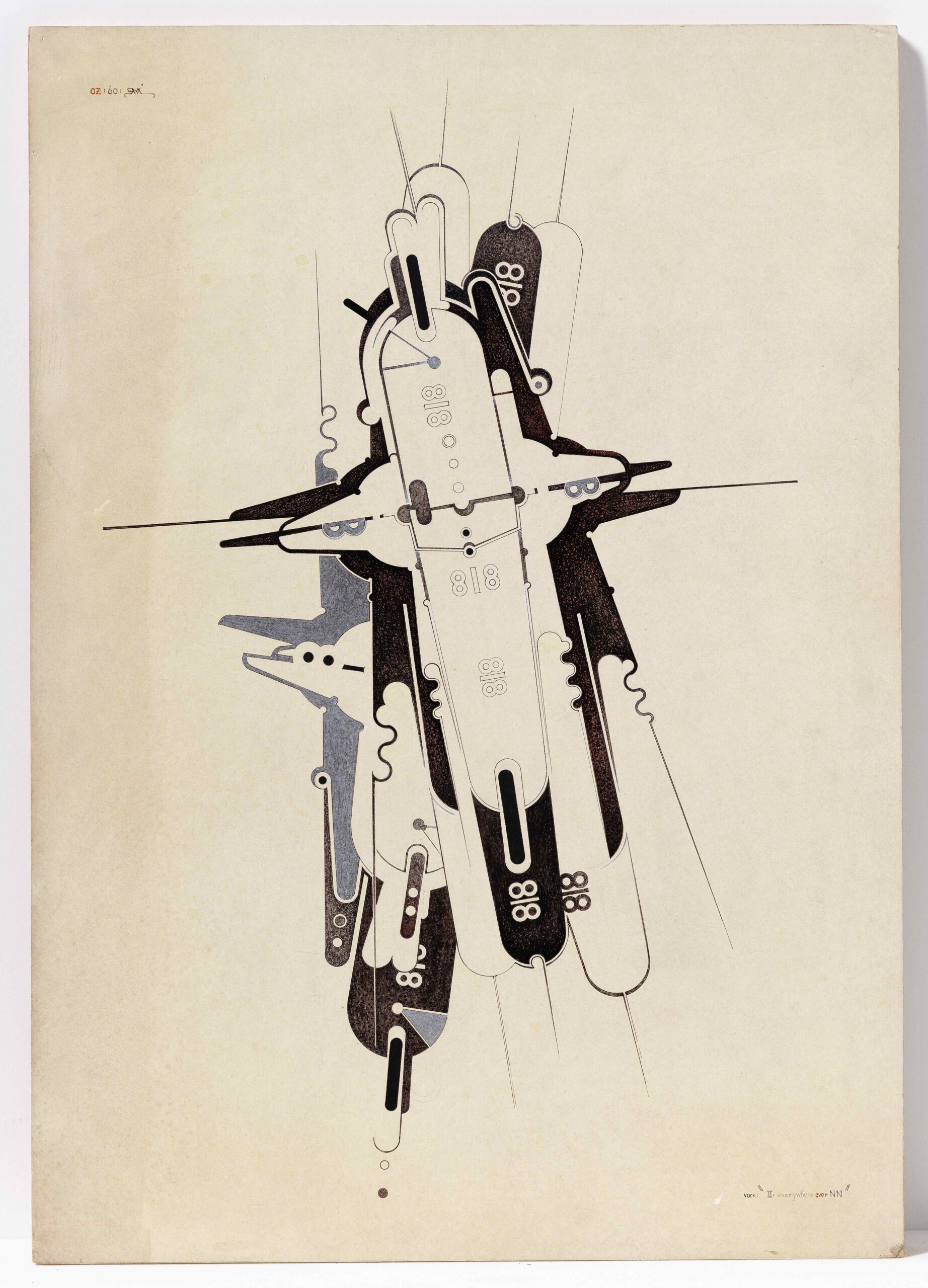
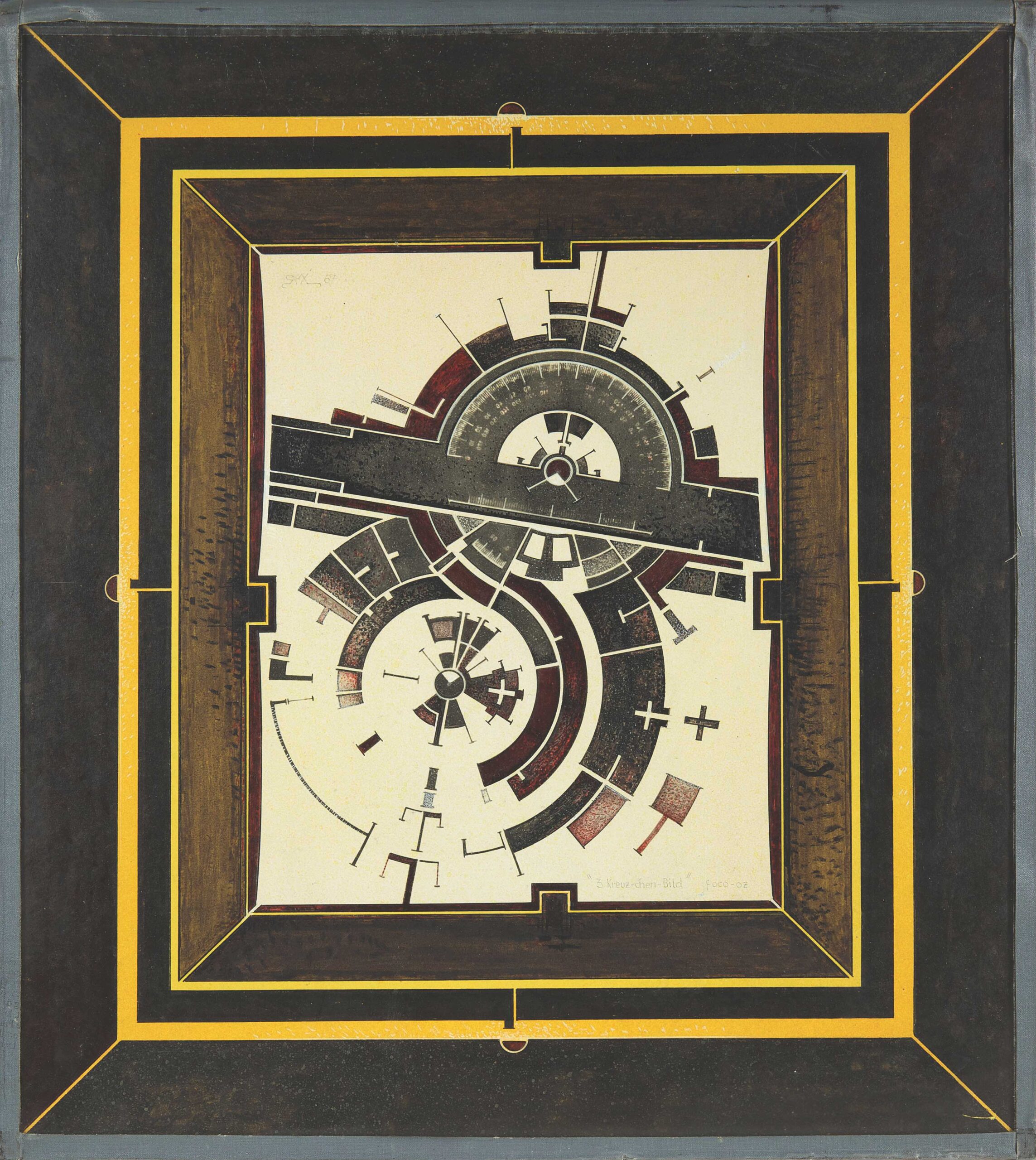
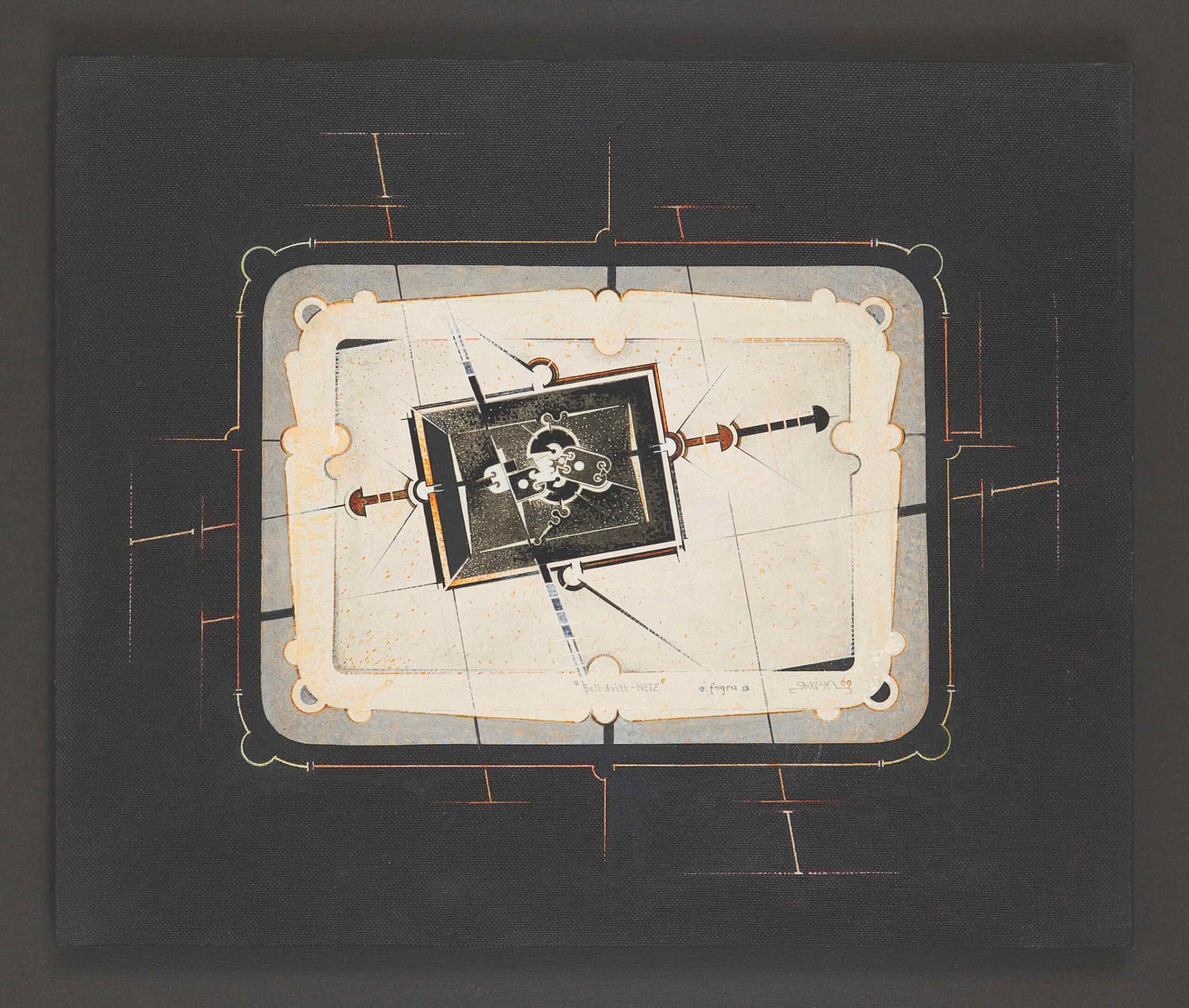
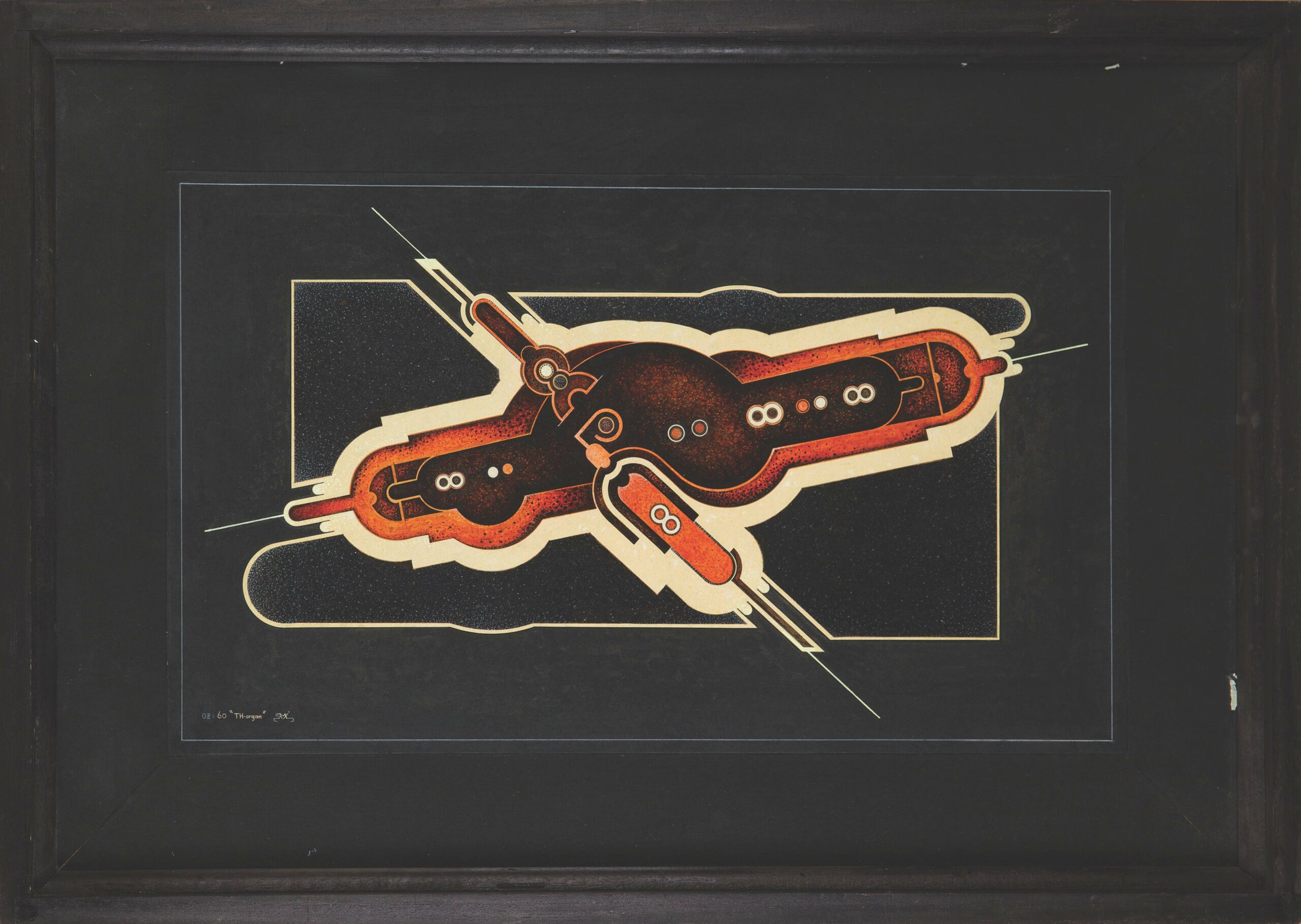
As of 1918, he found a very personal, in a way psychedelic, fantastic way of expression, painting tridimensional unrealistic landscapes in intricated images mixing huge gear wheels with all kinds of means of transportation, from trains to aircrafts and from speed cars to boats. In 1919 after the students’ riots which had the emperor resign, the new German Republic was established in Weimar. Being politically engaged, and close to the new social-democrat president Ebert, getting married and expecting the birth of his first kid, facing the opening of the Gropius newly created Bauhaus school, and founding with the artists Johannes Molzahn, and his own wife Ella Bergmann the Weimar section of Dada, making contact with most of the new movement’s activists, Robert Michel was living within the most excitingly modern surrounding whirlpool an artist could dream of. He had been invited by Walter Gropius to participate in a 4-artist show to announce the soon-to come opening of Bauhaus.
From there on and for the next 2 years, the artist creates a corpus of a few dozens of works which all conceal more and more mysteries. Still inspired by mechanics, but obviously also by fairy tales, Bauhaus ideas about architecture and superstitions, the paintings and drawings Robert Michel executed between 1919 and 1921 count within the most enigmatic modern paintings one can find. The human figure resembles more to disjointed or mechanical puppets, set in axonometric-perspective industrial landscapes, surrounded by black cats, measuring instruments, curtained window, horses, mustaches, letters, numbers and kabbalistic symbols, which have not yet revealed their secrets. Further to the agreement the gallery signed with the artist’s estate, we’ve appointed 2 young German art historians to search about the internal meaning of Robert Michel’s imagination between 1919-1921, and we shall be able to propose to the ArtBasel Paris visitors a fully illustrated catalogue including a scholarly and stylistic study about this outstanding and scarce series of works.
The collection of about 20 works we propose to show at the Premise section of ArtBasel Paris 2026, is the result of a more than 20-year involvement, research and purchase politics. Similar quality works can only be seen at Los Angeles County Museum of Art and Sprengel Museum Hanover.
MORE INFORMATION:
// Ella Bergmann-Michel
// Robert Michel
// Heimatmuseum of Modern Art (02/10-31/10/26 | Paris)
Category:
Exhibitions